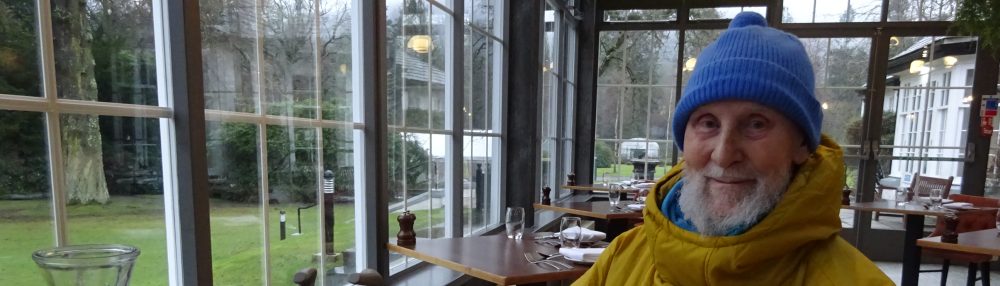
Hotels in 2024 – Part One

Despite not having been away on holiday this year, Lorna and I have enjoyed lunching at a number of inviting hotels throughout 2024.

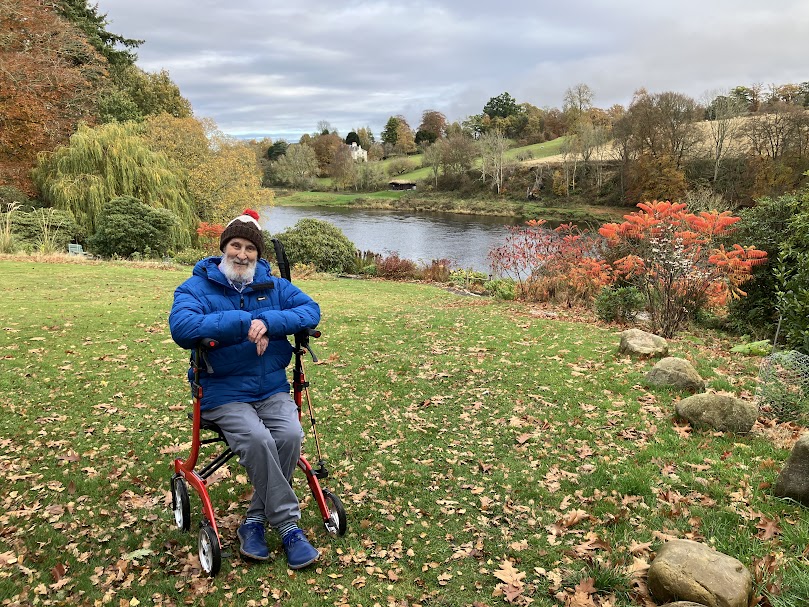
While she was looking through her photographs of the year, Lorna discovered we had visited more than a dozen hotels at time of writing, several of them more than once. Including all of them in one blog post would make for rather a long article, so they’re being described in two parts. This post, Part One, features hotels visited between January and June 2024. Part Two will cover July to December.

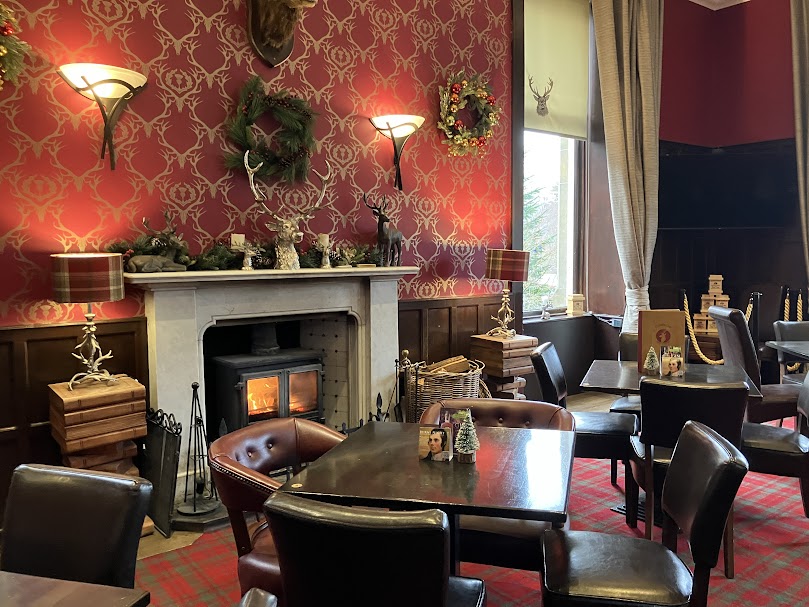
Our first hotel of the year (and our second most visited) was Dunkeld House Hotel.

Dunkeld House Hotel.
Looking up at Dunkeld House Hotel from the River Tay.

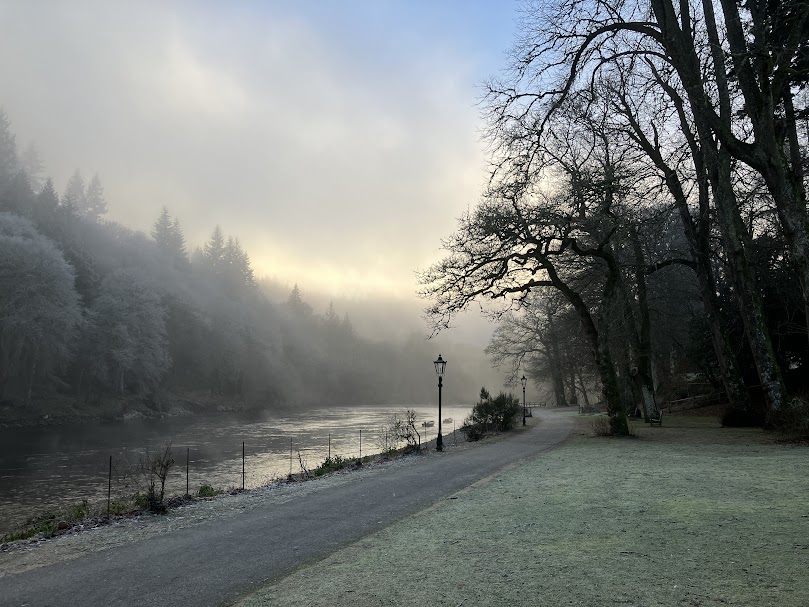
It was a cold and frosty day in early January, and the River Tay was mistily atmospheric.

River Tay at Dunkeld House Hotel.

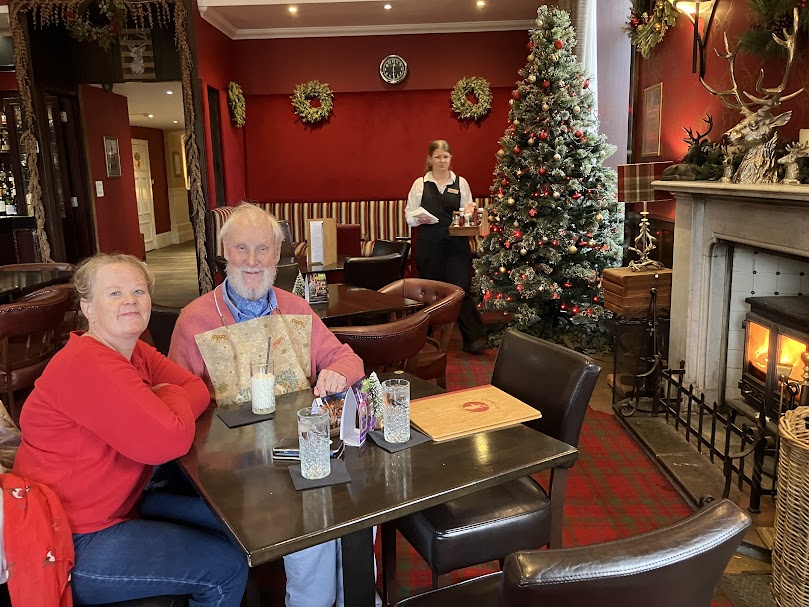
I was glad to get indoors and warm up before removing my outer garments.

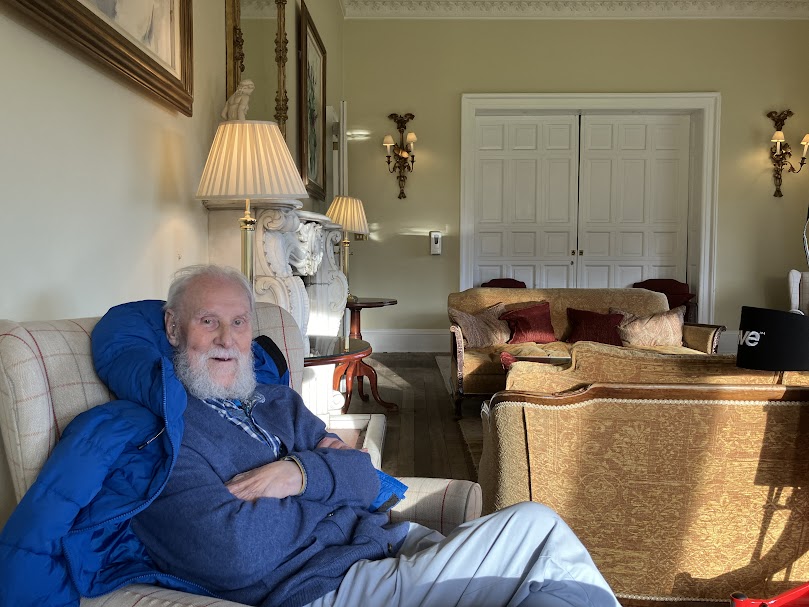
A happy Bennet warming up in Dunkeld House Hotel.

In February we visited a hotel we’d never been to before: Rufflets, near St Andrews.

Rufflets Hotel, near St Andrews, Fife.

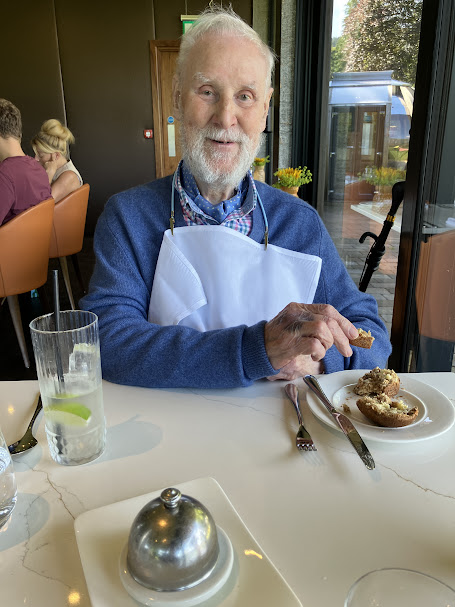
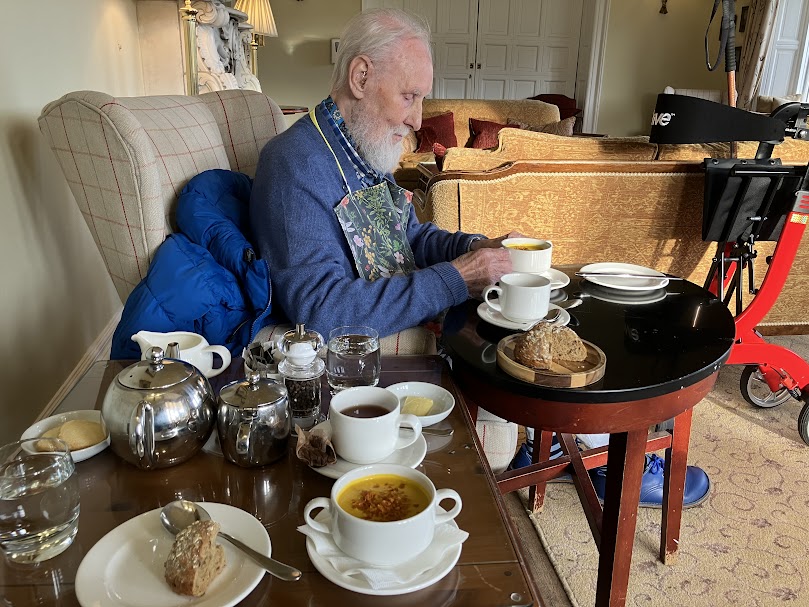
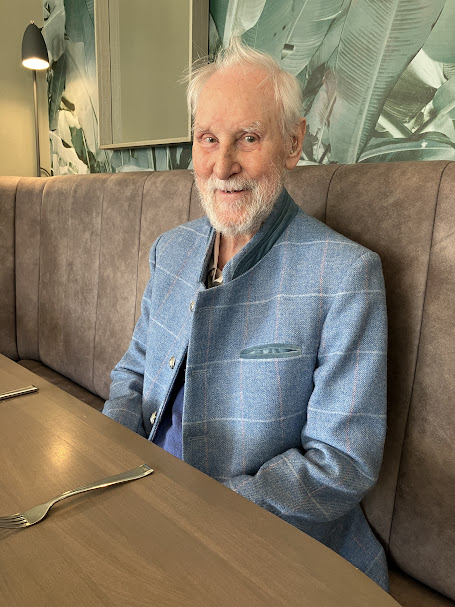
Here I am, eagerly awaiting delivery of some delicious soup at Rufflets.

Eagerly awaiting soup at Rufflets.

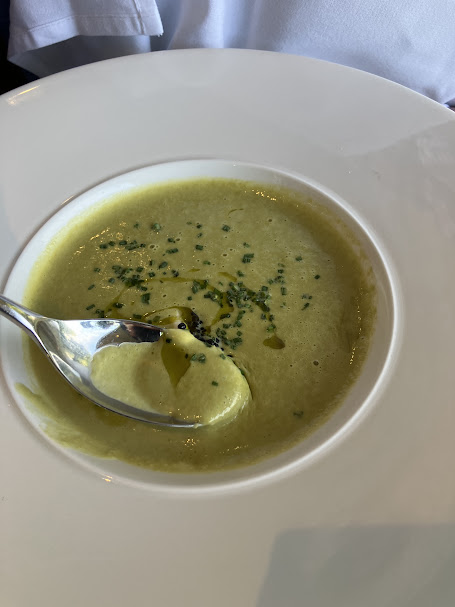
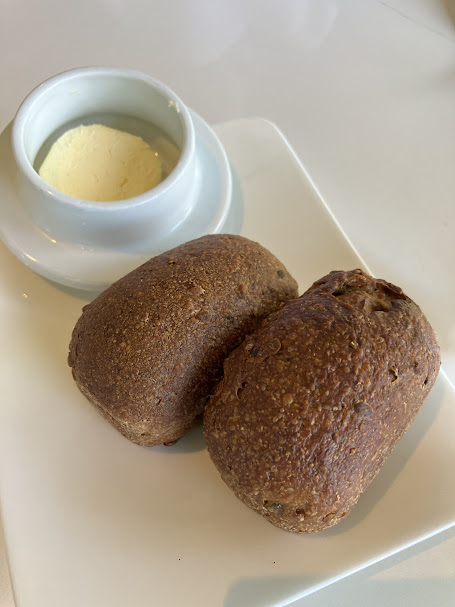
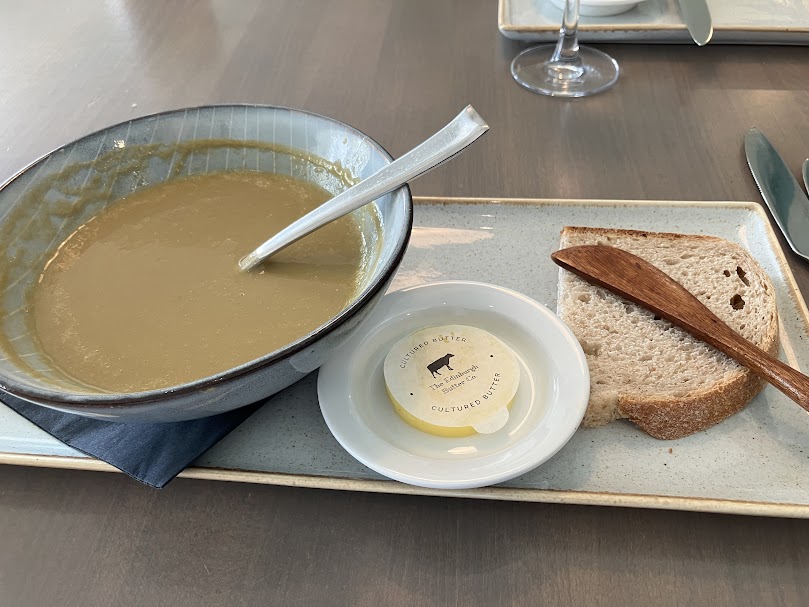
I think it was mushroom soup I had. It came with bread and a little pat of cultured butter from the Edinburgh Butter Company, ready to be spread with a delightful wooden knife.

Soup and butter with a pleasing wooden, paddle-like, butter knife at Rufflets.

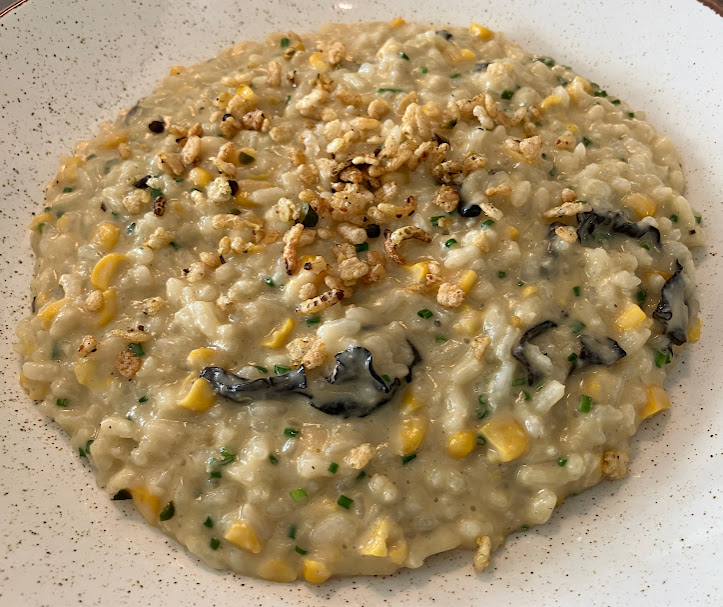
The vegetarian main course was mushroom risotto, an offering Lorna is not especially fond of, but she was intrigued to try it since it contained sweetcorn as well as mushrooms. Happily, she declared it tasty, and the sweetcorn an excellent addition.

Sweetcorn and mushroom risotto at Rufflets.

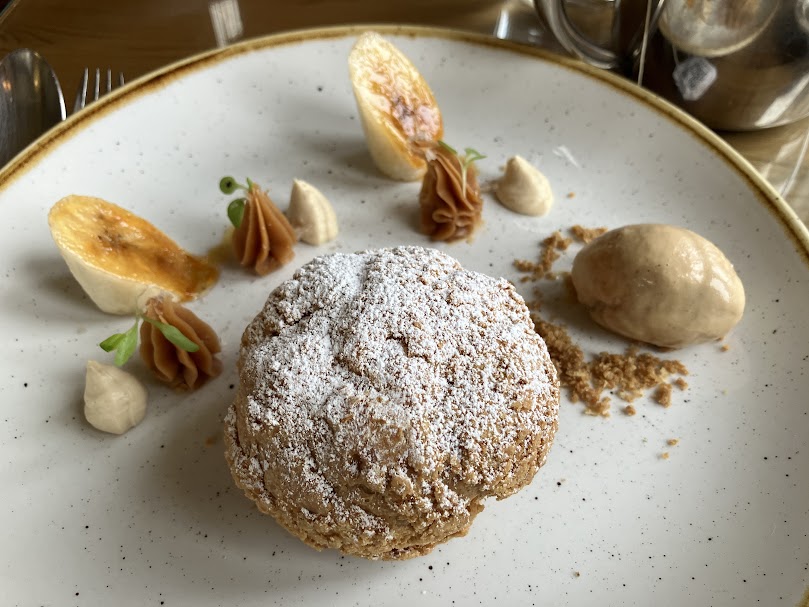
After the risotto Lorna felt too full for dessert, but I opted for a chocolate sponge with salted caramel sauce and ice cream. It was served with a long and very thin stick of spun sugar.

Sponge pudding with spun sugar stick.

After our meal, we moved to more comfortable seats in a lounge area to enjoy hot beverages.

Enjoying a hot beverage in the lounge at Rufflets.

There was a welcoming fire in the hearth. We sat there for a while, relaxing happily.

The cosy lounge at Rufflets.

February also saw us visiting Ballathie House Hotel, near where we live in Blairgowrie (more on that one later) and the Dakota Hotel at South Queensferry.

It wasn’t our first visit to the Dakota Hotel, although it’s not somewhere we’ve been to very often.

Waiting for food at the Dakota Hotel, South Queensferry.

Lorna’s outstanding memory of the Dakota is that it once served up the best gnocchi she’s ever had. It wasn’t on the menu on this occasion, and she opted for two vegetarian starters instead of a main course.
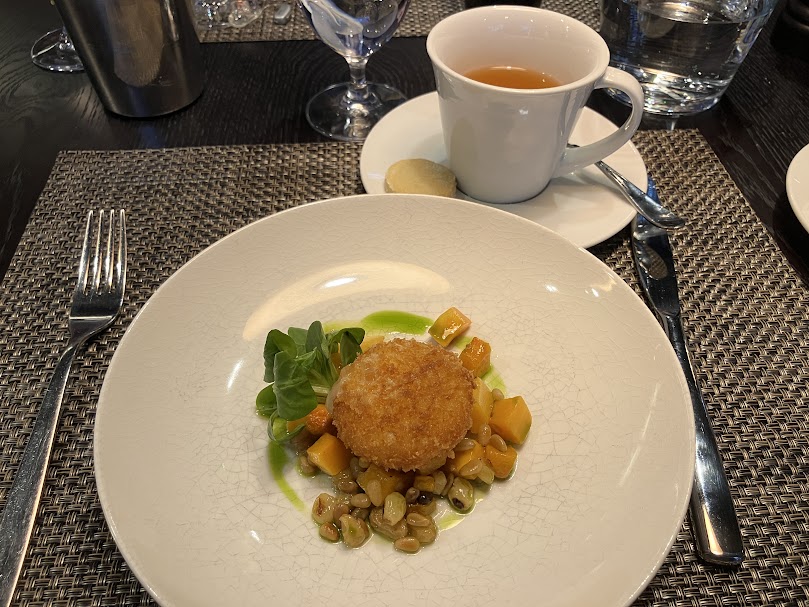
Crispy goat’s cheese with butternut squash, raisins and pine nuts at the Dakota Hotel.
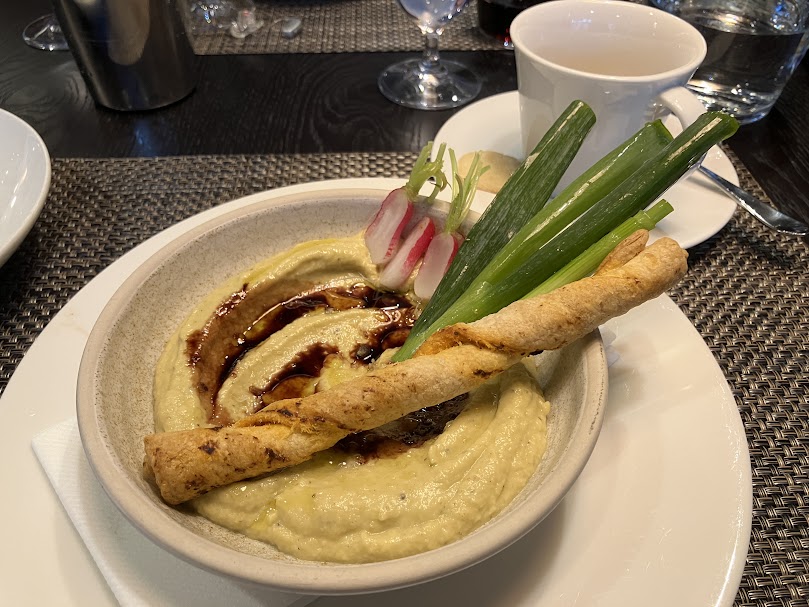
Hummus with a cheese straw at the Dakota Hotel

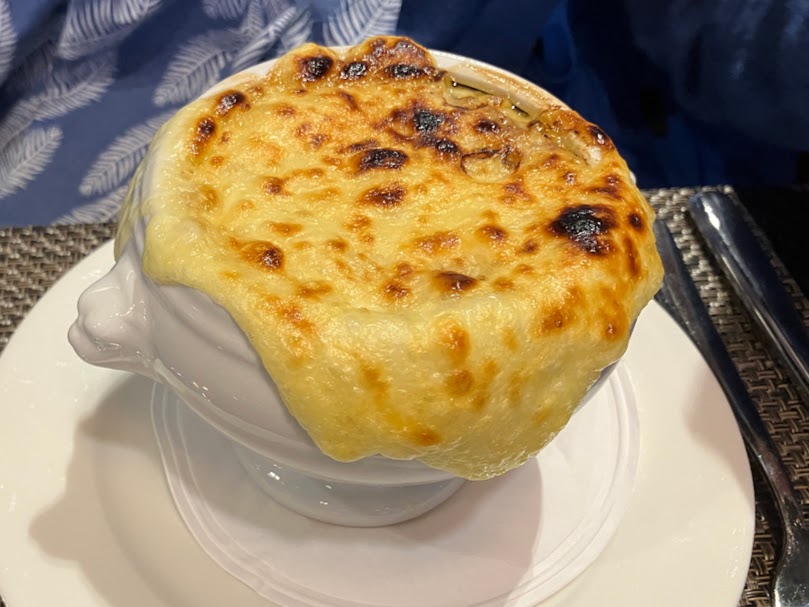
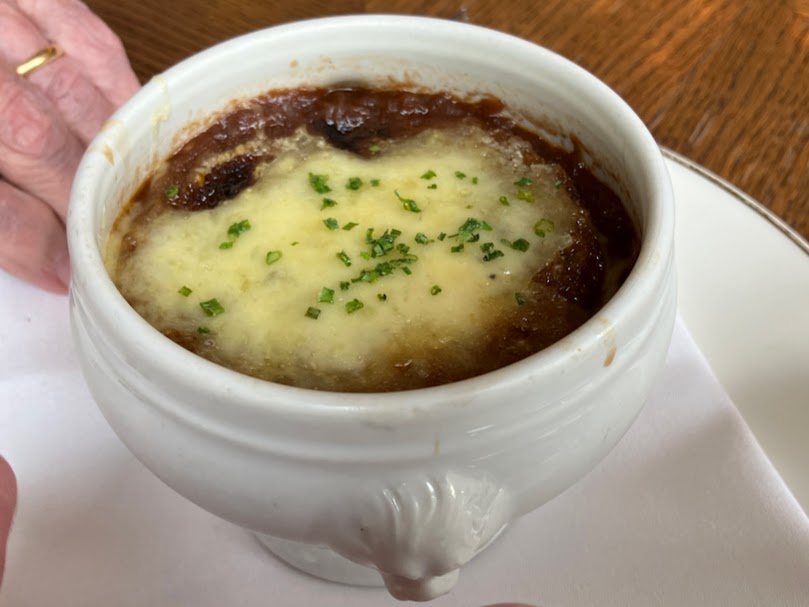
I had the French onion soup, which was so large and filling I had no room for pudding. It was delicious but quite a challenge to eat, being entirely covered with a thick slab of melted cheese.

Generously cheese-topped French onion soup at the Dakota Hotel.

For Christmas 2023, Lorna and I gave each other luncheon vouchers for the Balmoral Hotel in Edinburgh. In late March we drove south to our home town to spend them.

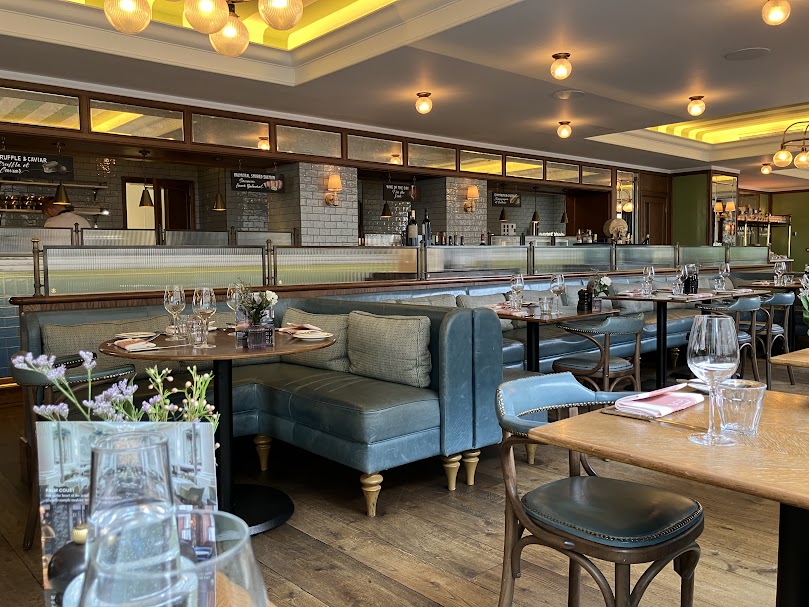
Brasserie Prince in the Balmoral Hotel, Edinburgh.
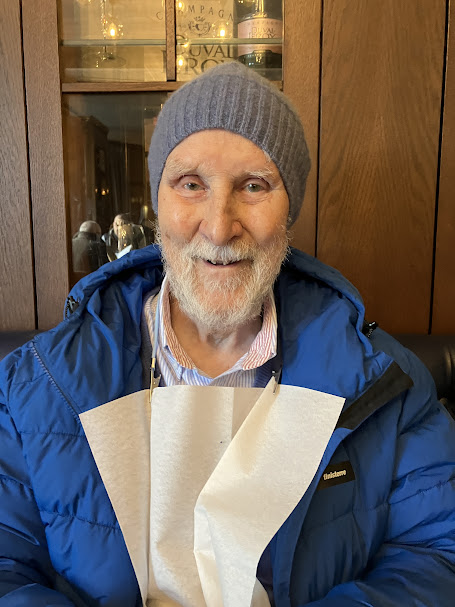
Happy to have been given a large napkin at Brasserie Prince.

The lunch was a 3 course set menu, and the starters were sizeable. Lorna’s starter was, in fact, larger than her main course.
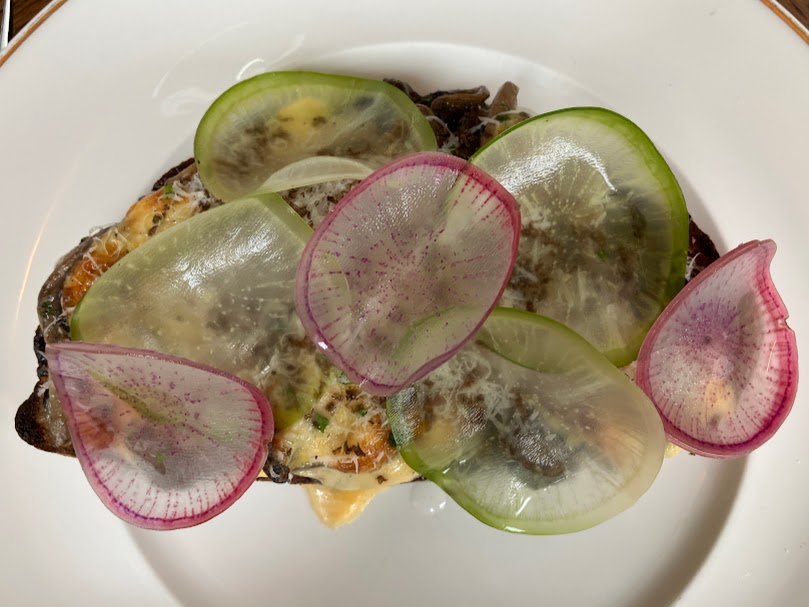
Lorna’s starter: sourdough toast with wild mushrooms in a cheese sauce topped with pickled radishes.
My starter: another French onion soup, this time not quite so thickly covered with cheese.

We both very much enjoyed our starters, and were also delighted by the main courses.

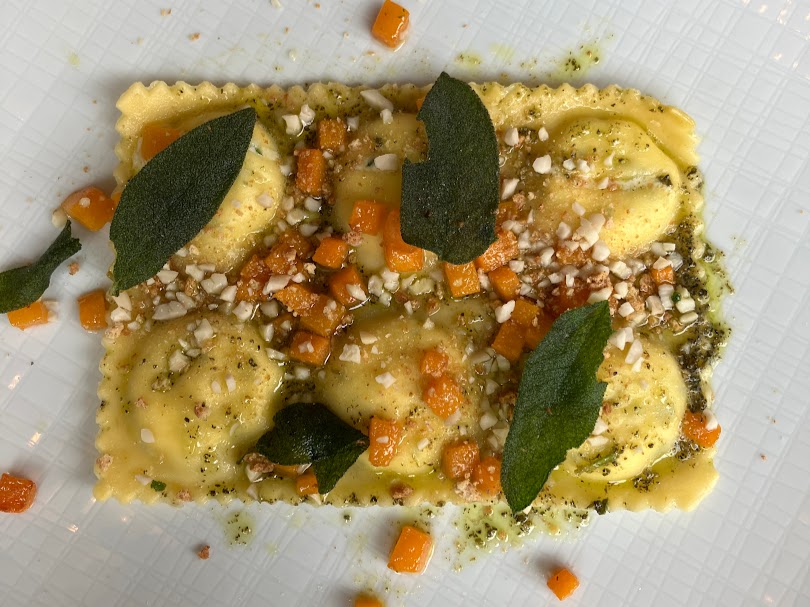
Lorna’s main: butternut squash and ricotta ravioli in a sage butter sauce with crispy sage leaves.
My main: chicken with heritage carrots, spinach, crispy chicken skin and potato fondant.

We were quite full by the time it came to puddings, but in for a penny in for a pound.

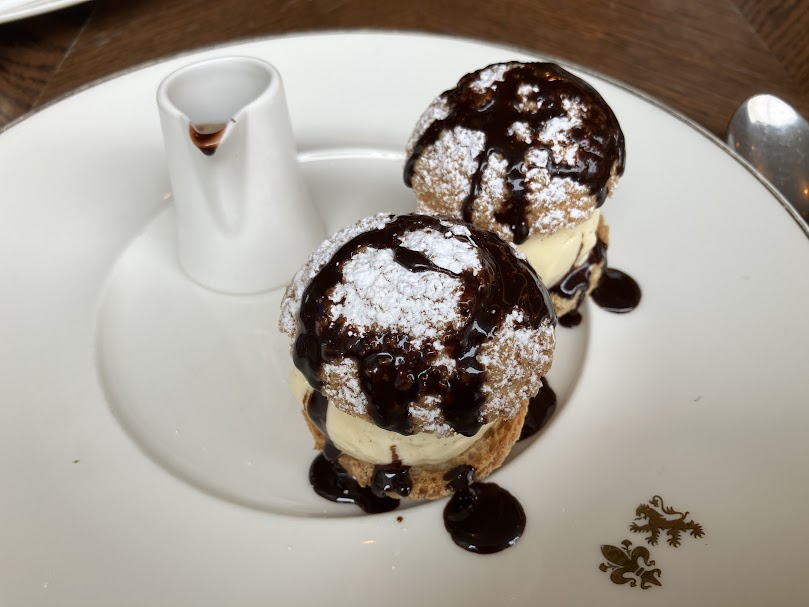
Lorna’s pudding: ice cream profiteroles with a bitter dark chocolate sauce.
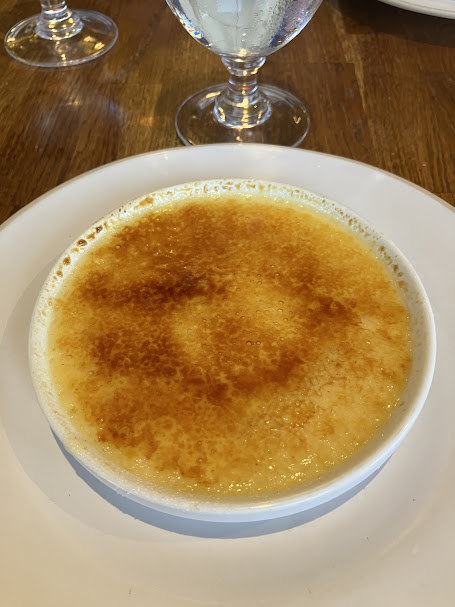
My pudding: creme brulee.

After finishing our three courses, we rolled ourselves into the bar for tea and coffee, which was served with excellent shortbread we barely had room for.

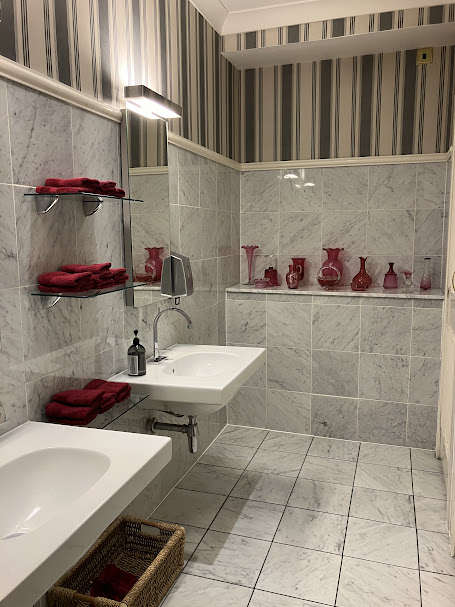
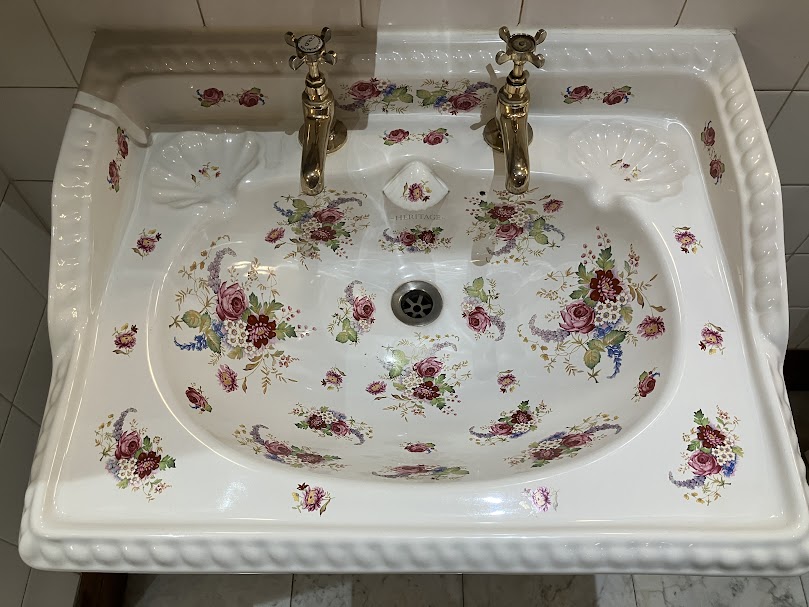
Lorna came back from a visit to the facilities joyfully reporting that the flamboyant sinks she remembered from visiting the Balmoral many years ago were still in evidence.

Floral sink at the Balmoral Hotel.

At the end of April we made one of several visits to our most frequented hotel of the year, Ballathie House Hotel, near Blairgowrie.

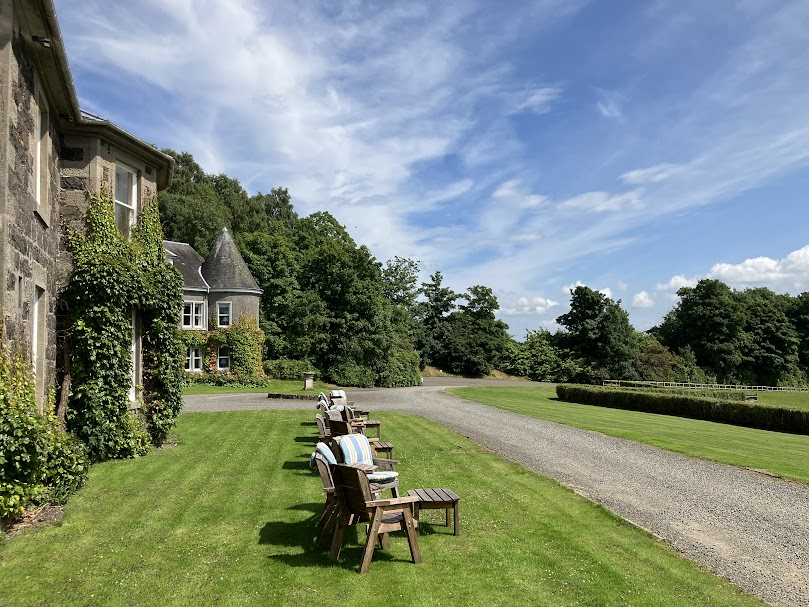
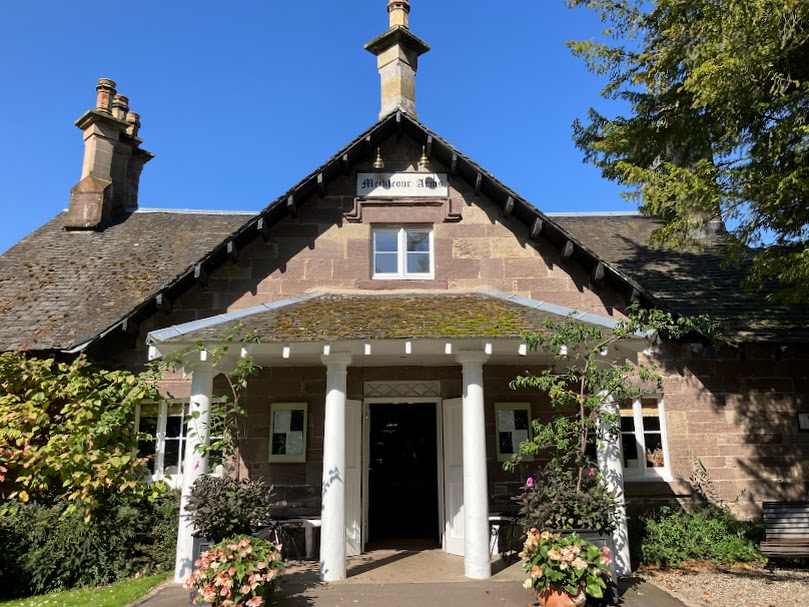
Outside the front door at Ballathie House Hotel.

We like Ballathie for many reasons, including its proximity to where we live (a 15 minute drive away), its beautiful grounds and magnificent riverside setting with long, tree-lined drive, the splendid peacefulness of the drawing room where they serve weekday lunches, the delicious soup and sandwich offering they provide from Monday to Friday, the very pleasant ambience and the excellent, welcoming staff. In short, we’re always happy to pay it a visit.

Lunching in the very quiet drawing room at Ballathie. Carrot and ginger soup with home-made fennel and black pepper cob, and a large egg mayonnaise sandwich to share, with root vegetable crisps.

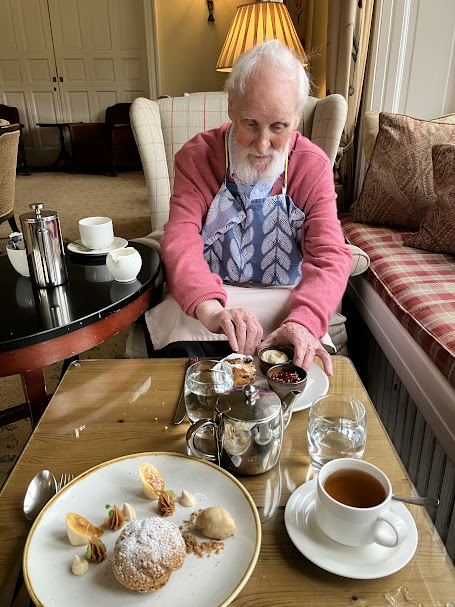
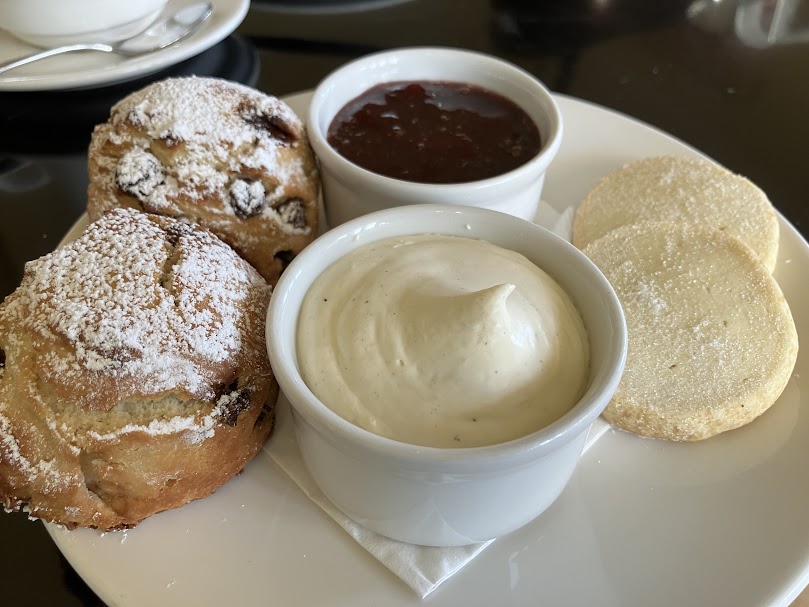
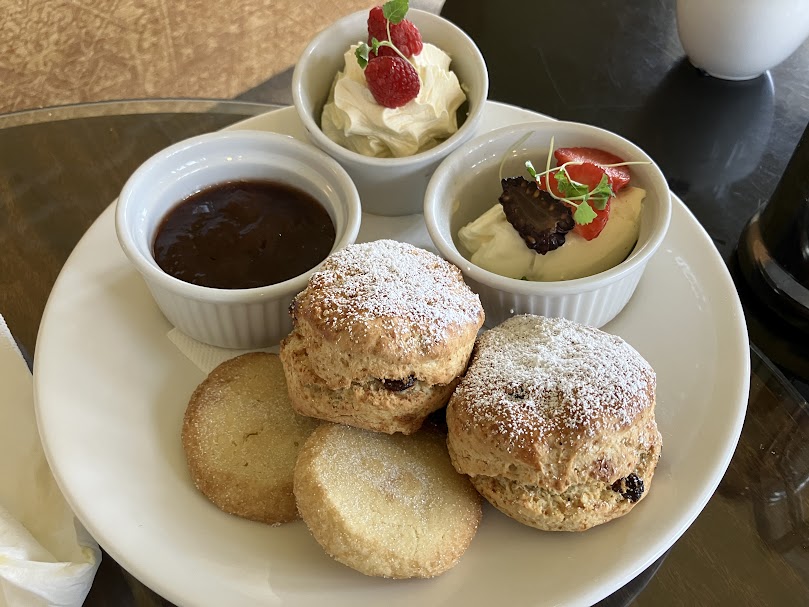
The weekday lunch menu is quite limited, with one soup on offer, several sandwich options, a dessert of the day, and a cream tea available. We often settle for soup followed by a cream tea, which we find fills us up nicely. The cream tea comes with tea or coffee, superb home-made fruit scones, a plentiful supply of jam and cream, and two shortbread biscuits.

Cream tea at Ballathie House Hotel.

April is my birthday month, and in 2024 I celebrated the achievement of reaching 95 years old. This visit to Ballathie took place on the day itself, but we also celebrated the milestone in early May with other family members.

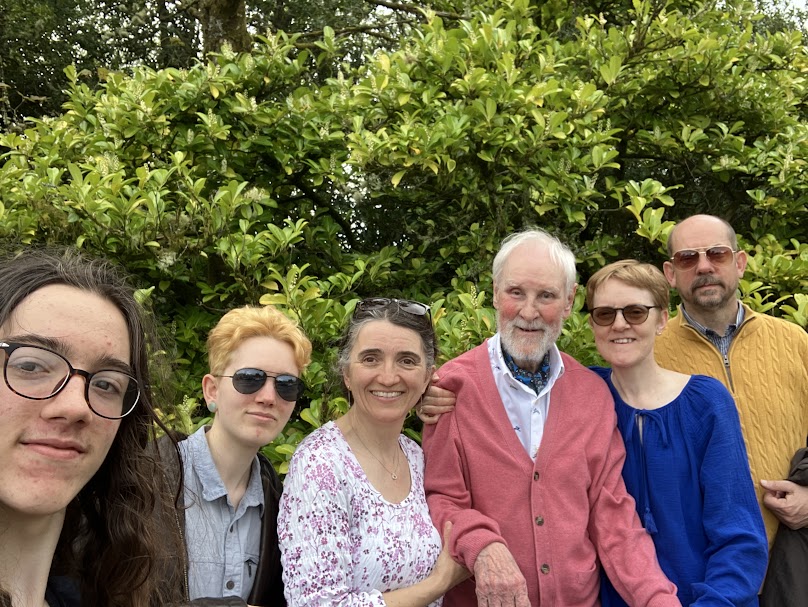
On 5 May we met up with my son Donald and his partner Gail, and their two children, James and Sam, at Gleneagles, near Auchterarder. Lorna forgot to take photographs during this occasion, but after our lunch and before we parted, Gail remembered to get a selfie shot using her phone camera. Unfortunately, my daughter Flora was unable to join us due to feeling unwell that day.

At Gleneagles to celebrate turning 95.
Left to right: my two grandchildren Sam and James, Gail, me, Lorna, Donald.

June was a very good month for hotels. We visited six different ones, four for meals, including our old favourites, Dunkeld, Ballathie and Gleneagles, and two more for coffee.

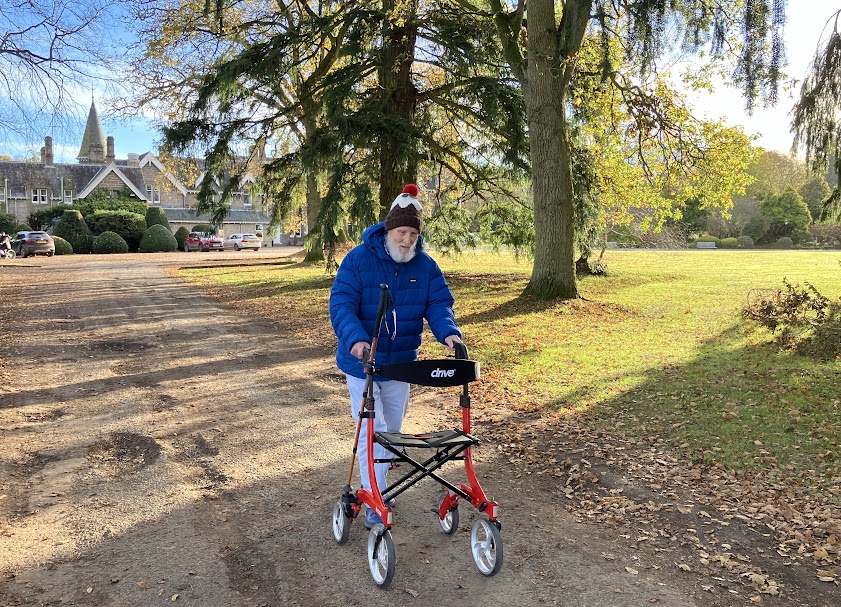
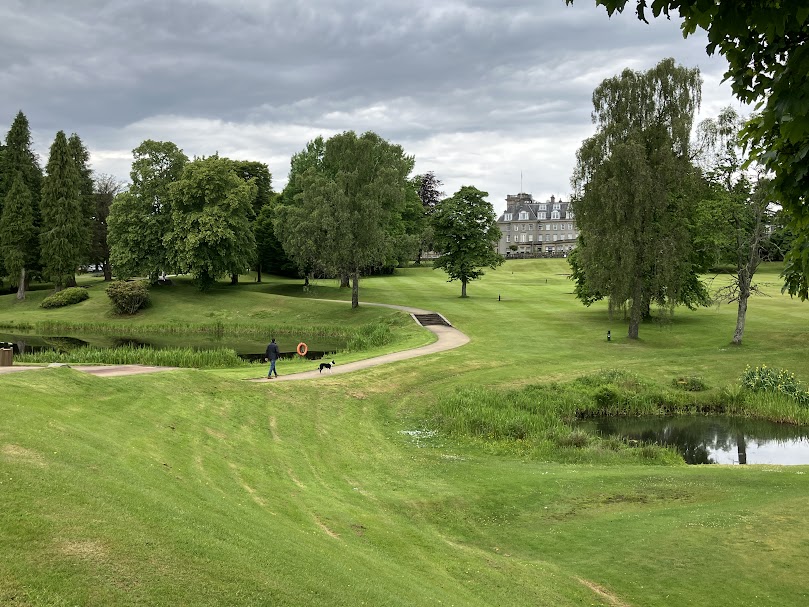
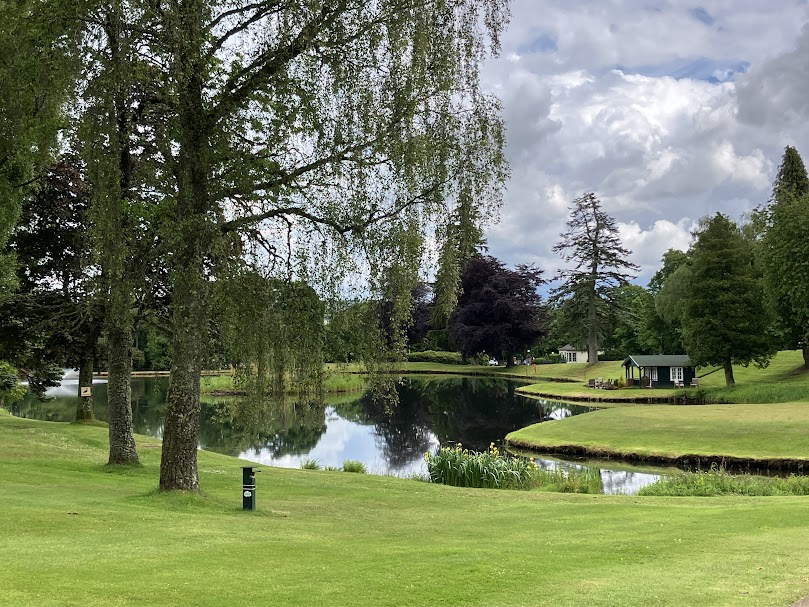
The grounds at Gleneagles are beautiful year-round, but perhaps particularly attractive in the summer when its many trees are in full leaf.

The grounds at Gleneagles with the hotel in the background.
Lake at Gleneagles.

It wasn’t a particularly warm day when we lunched at The Dormy restaurant in Gleneagles. For some reason (perhaps because she’s done it so many times before in the same place) Lorna didn’t take any photographs of our meal, but she did take a few when we’d moved over to the fireside for hot drinks. It was nice to have the fire on in June.

The welcoming fireplace at The Dormy,
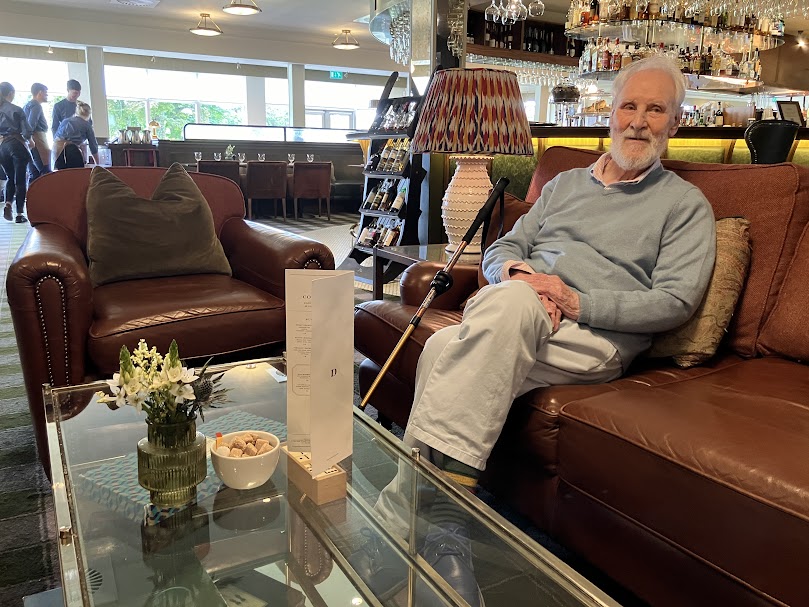
We occupied a sofa in front of the fire; a good place to sit on a cold afternoon.

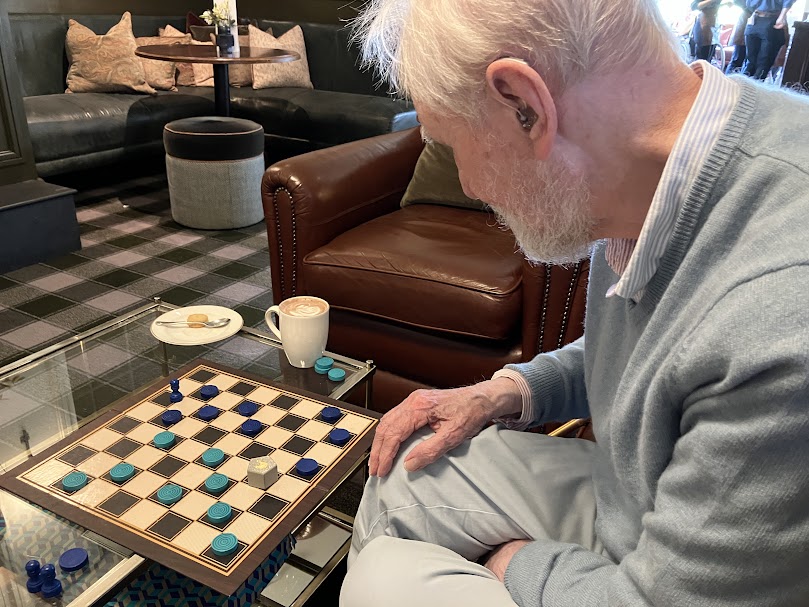
Underneath the glass top of the coffee table there were several board games. We took out the draughts board and I tried hard to remember how to play the game. Some of the pieces were missing, but there were other small objects in the box that did the turn.

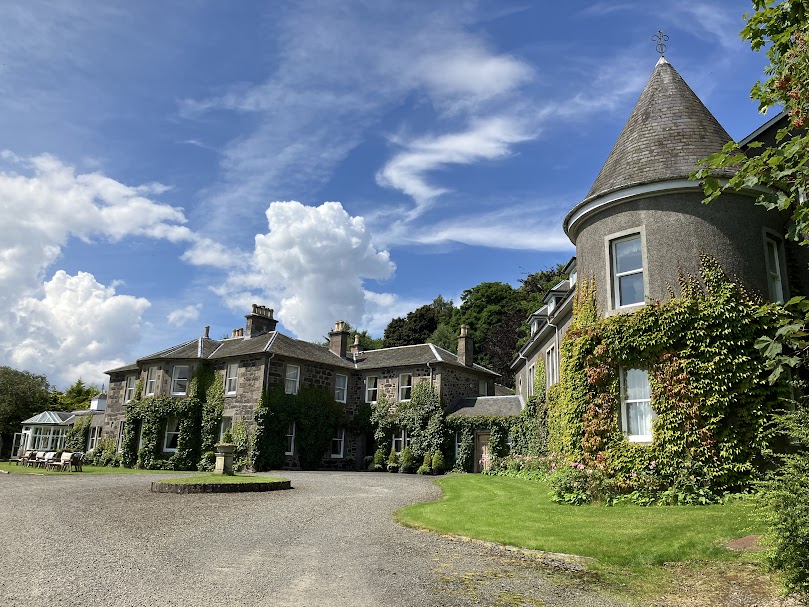
At the end of June we had lunch at Dalmunzie Castle Hotel, a place we only discovered last year. The hotel sits in a secluded glen near Spittal of Glenshee, roughly halfway between Blairgowrie and Braemar. It’s reached by a long private drive.

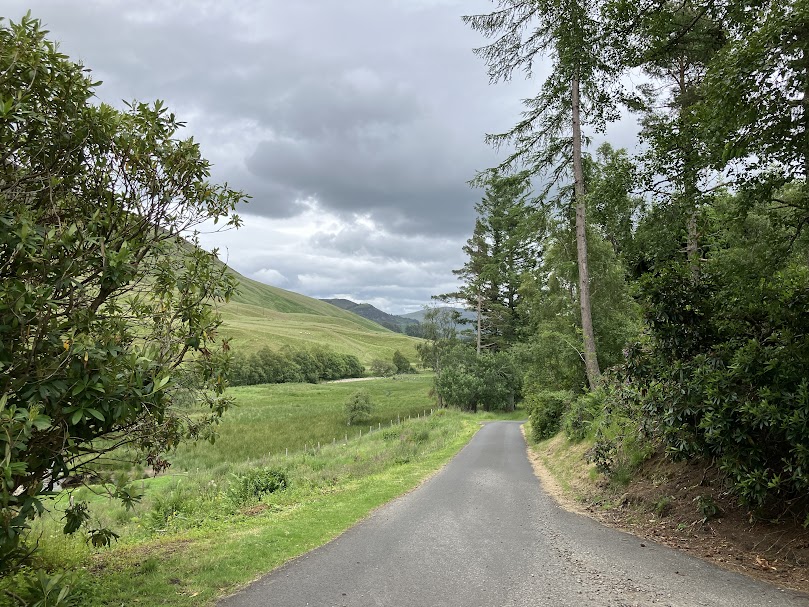
The drive at Dalmunzie.
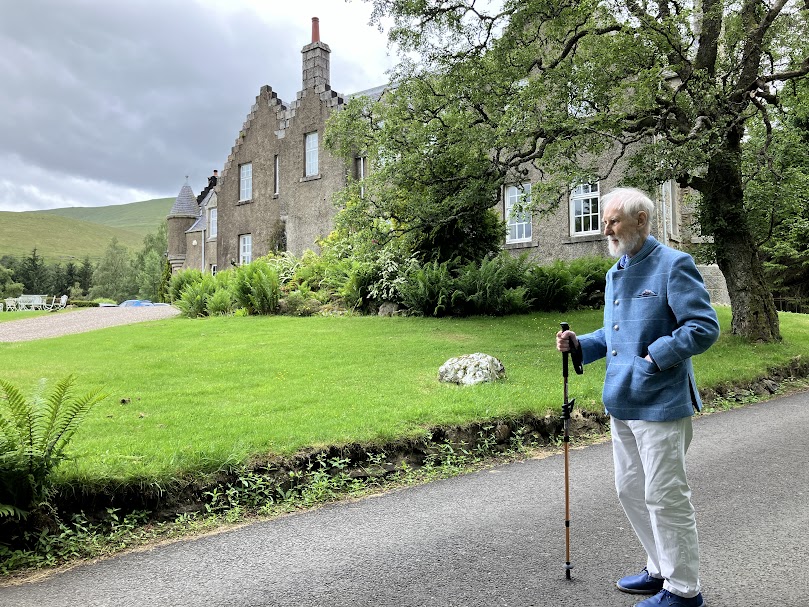
Standing outside Dalmunzie Castle Hotel in a proprietorial manner.

Similar to Ballathie House Hotel, Dalmunzie serves lunches throughout the week in the lounge areas rather than the dining room.

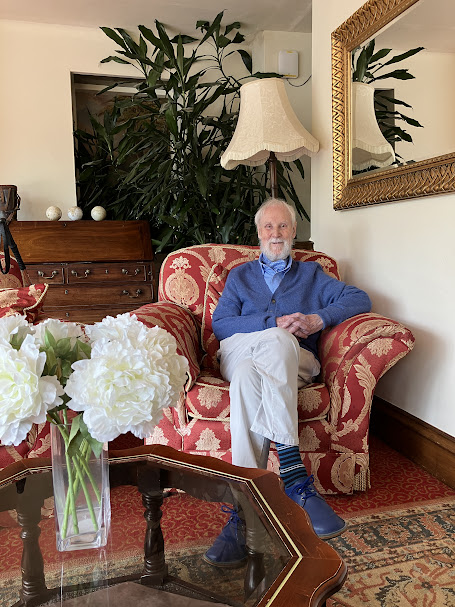
The main reception room contains a number of sofas and armchairs.

The main reception room at Dalmunzie Castle Hotel.

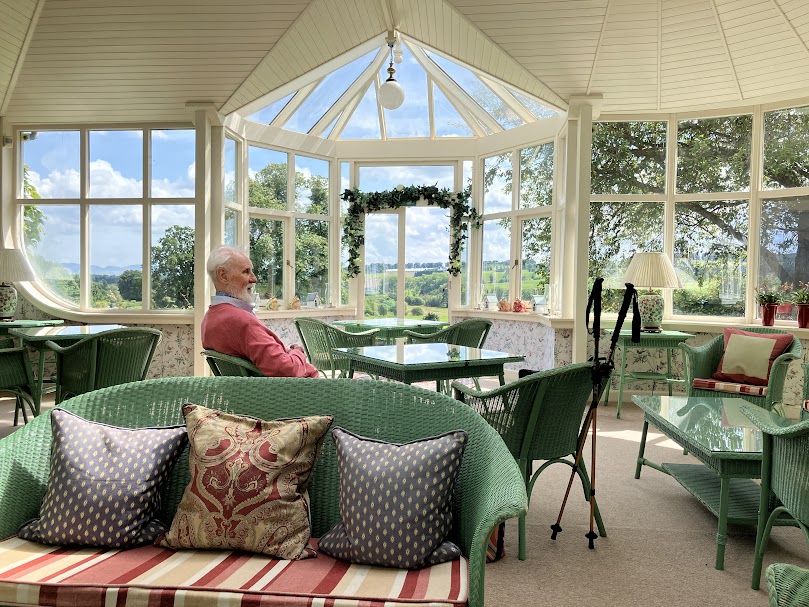
Just round the corner from this main room there’s a quiet little area containing one sofa and two armchairs, and that was where we chose to sit for lunch.

In the quiet little lounge area off the main reception room at Dalmunzie.

The sandwiches were generously filled, made with thick soft bread, and accompanied by a bowl of salted crisps.

Delicious sandwiches at Dalmunzie Castle Hotel.

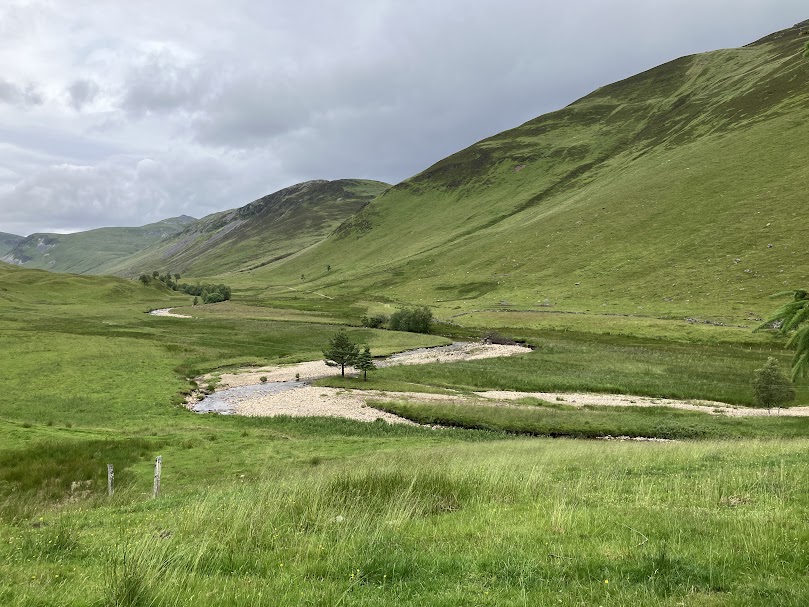
After lunch, we took a short walk up past the hotel to admire the glen beyond. It looked quite forbidding, but majestic.

Wild but majestic, the scenery surrounding Dalmunzie Castle Hotel.

If you’ve enjoyed these hotels, watch out for Part Two, coming soon….

Kelpies

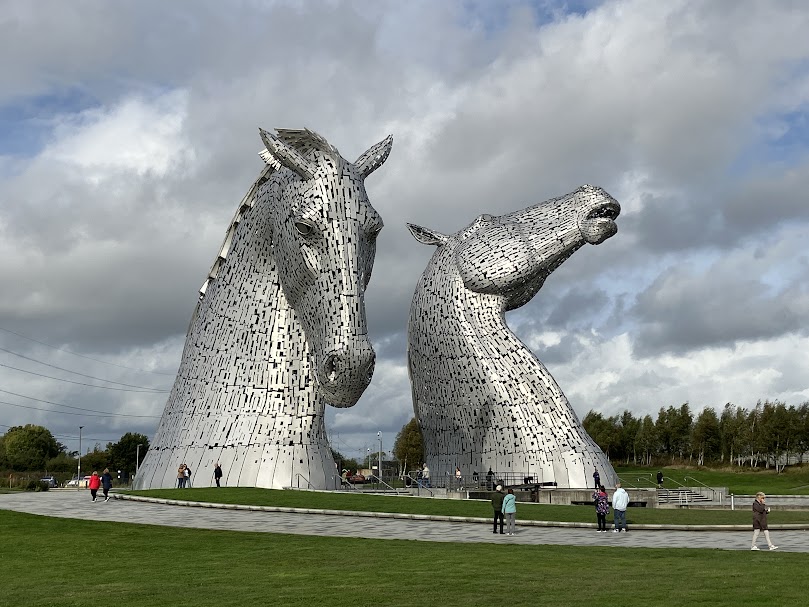
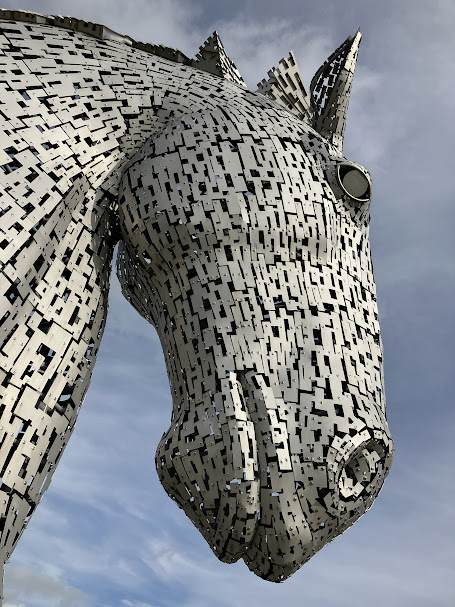
Just over ten years ago, in 2013, something new and curious appeared in the central belt of Scotland. Two enormous stainless steel horse heads reared up out of parkland near Falkirk and became known as ‘The Kelpies‘.

According to Wikipedia, in Scottish mythology, a kelpie is a shape-changing spirit that inhabits bodies of water and often takes the form of a horse.

The Kelpies, rising out of the ground near Falkirk.

These giant works of art, and impressive feats of engineering, were designed and created by Scottish sculptor, Andy Scott. His website contains some excellent photographs of them.

One bright and windy October day, ten years after their installation, Lorna and I decided it was high time we went to see these magnificent beasts for ourselves.

Bennet in front of kelpies.

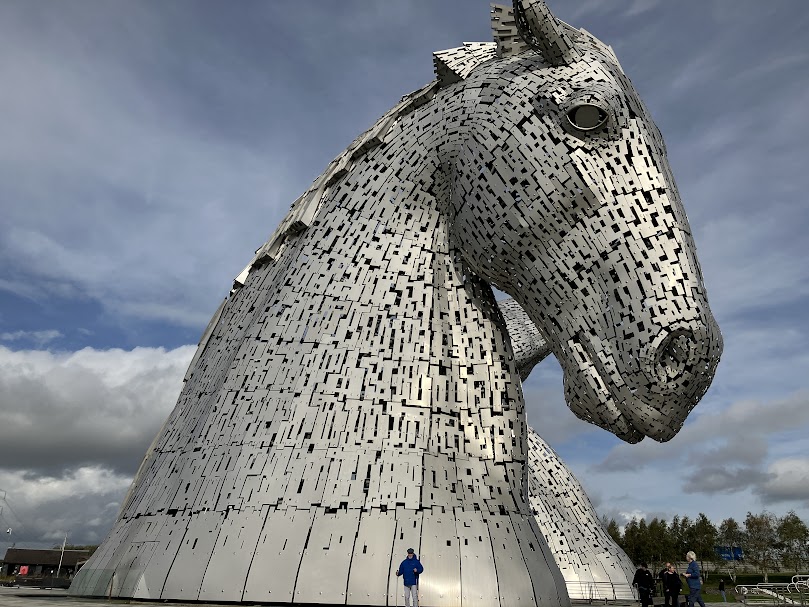
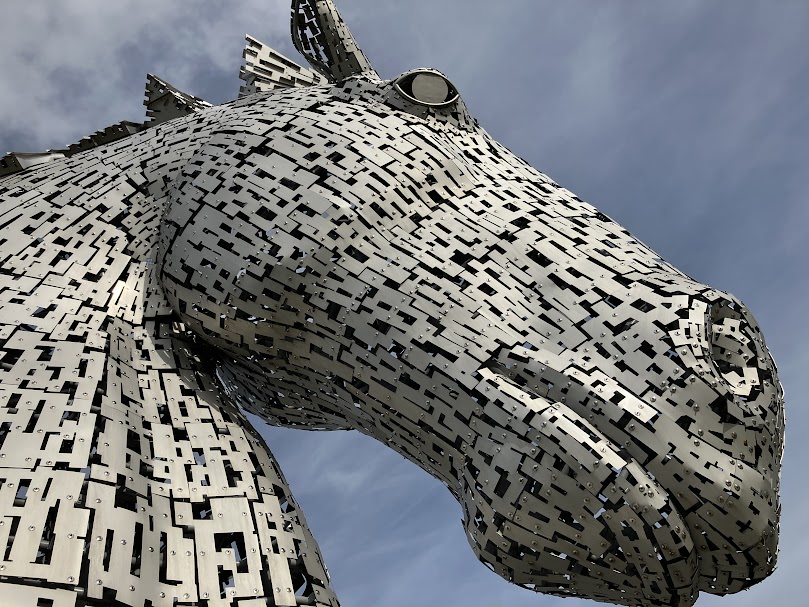
They look pretty big from a distance, but their size is even better appreciated up close as they loom overhead at a height of around 30 metres (100ft) tall.

Large kelpie with Bennet underneath, giving scale to the picture.

Each of the two kelpies is constructed from approximately 18,000 different pieces, features 464 steel plates, contains over 1.5 miles of steel, and weighs over 300 tonnes.

One of the kelpies, showing detail of steel plates.

This sculptural marvel, said to be the largest equine structure in the world, is situated in a pleasant spot called The Helix, a park containing plenty of parking, and a visitor centre with cafe, shop and toilets. There is wheelchair access throughout.

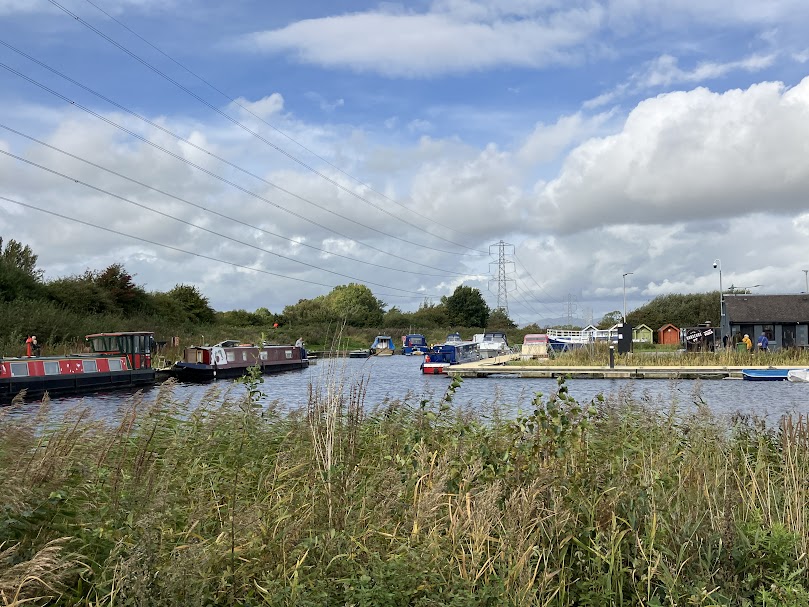
The Kelpies sit next to the Forth and Clyde canal, which inspired the choice of sculpture. In times gone by, draught horses walked along the canal towpaths pulling boats along the water. The canal is still well-used by boats, and there are some nice flat walks alongside it.

Canal boats on the Forth and Clyde canal near The Kelpies.

We walked as far as a little bridge over the canal, which gave us a feel for the surrounding area. 

With sufficient time and energy one could easily spend several hours at Helix Park, walking or cycling, or perhaps even cruising down the canal on a narrowboat.

The Forth and Clyde canal with kelpies in the distance.

Up, up and away

One of the most unexpected things that happened to me last year occurred on a sunny September day, when Lorna and I had a day out.

We headed north from our home in Blairgowrie, not sure where we would end up, but interested to see where the car might take us. We drove up the A93 towards Braemar in search of morning coffee and saw a sign advertising Dalmunzie Castle Hotel. Rather unusually, in addition to offering lunches and dinners to non-residents, the sign specifically mentioned morning coffees. We pulled off the road and drove slowly up a long, private driveway to the castle.

The building sat in a quiet and sheltered glen, and the sun was shining magnificently from a blue sky. We parked the car and entered the castle through a heavy wooden door. Inside, we found a comfortable lounge area, settled ourselves in and ordered coffee and tea, which came with delicious home-made shortbread biscuits.

Bennet lounging about in Dalmunzie Castle Hotel.

Happily refreshed, we continued our journey north. As we climbed up into the mountains, we passed the Glenshee ski centre, and noticed that although there was no snow at that time of year, the chairlift was operating. Lorna suggested it would be fun to get on the chairlift and go up the mountain, but I quickly reminded her that at my great age of 94, such an escapade held no attraction for me. I said I would wait if she wanted to go up on her own, but she wasn’t interested in that and we drove on. After a minute or two it occurred to me that if I had headgear that wouldn’t blow off, I could be persuaded to go up on the chairlift, and I said so to Lorna. The floppy-brimmed sunhats we had in the car didn’t seem suitable, but we had the idea of looking for a new hat in Braemar.

When we reached Braemar we went into a gift shop that also happened to have an impressive array of hats. I was drawn to several hats with brims of various sizes, but none of them seemed quite right. After much trying on, we found a hat of a different sort that looked as if it might be just the job. It went well with the outfit I had on and seemed to be the perfect purchase, so we bought it.

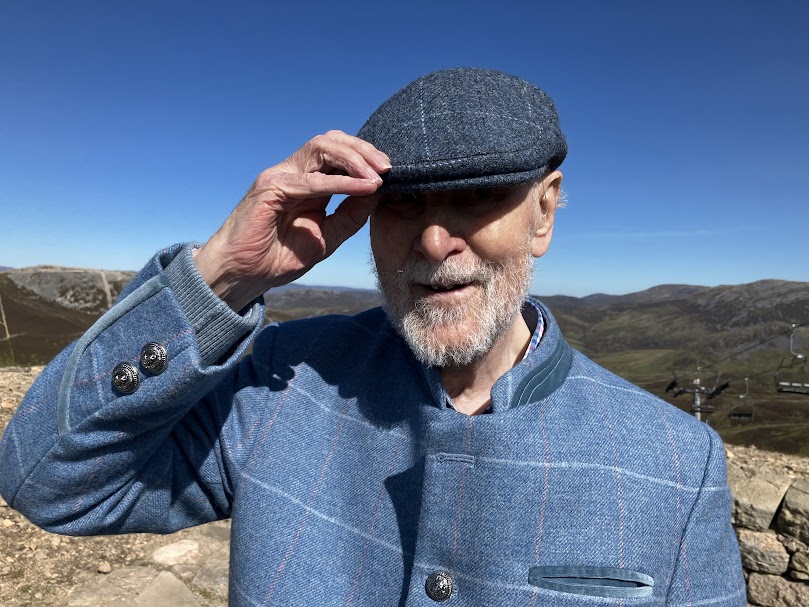
Bennet in his new bunnet in Braemar.

Thus suitably attired, I felt ready to head back down to Glenshee and hop on the chairlift. It was a first for both of us to go on a chairlift, and it wasn’t until she was several metres above the ground that Lorna remembered she had a fear of heights. She gripped the handrail tightly and I did my best to assure her that all was well. As we rose up the mountainside, the wind increased considerably. I held on to my hat to prevent it from flying off. Fortunately, it was a nice tight fit.

At the top, holding on to new hat.

After being helped off the moving chairs by an assistant, we staggered to a viewpoint where I was glad to sit down and take in the magnificent views.

At the viewpoint, admiring the surrounding scenery.

We stayed up there until our hands became numb in the cold wind. We were glad to get back on the chairlift and enjoy the shelter of the mountainside as we came down. The views were wonderful.

Coming down: a pleasant experience in the shelter of the mountainside.

Having overcome her initial terrors, Lorna declared she’d happily do it all again, but we agreed to keep that for another occasion. We spent the rest of the day feeling surprised and delighted by our unexpected mountain adventure, and it has provided happy memories for us both ever since.

My first five years

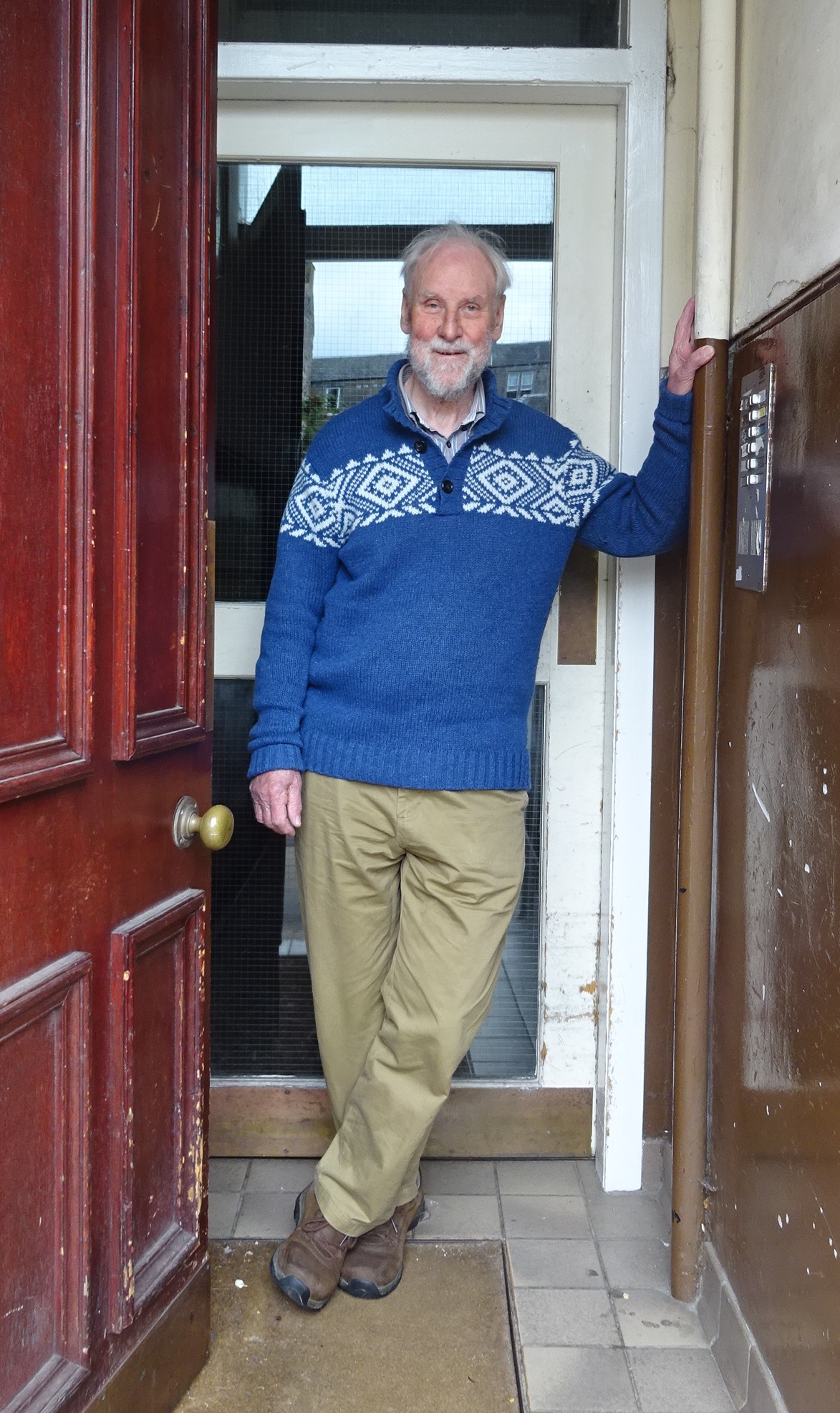
The following photograph, taken in September 2015, shows 15 Cathcart Place, a residential tenement in Edinburgh.  It has eleven small flats (apartments) and I was born in flat 8 (on the floor below the top floor).  That was my home from 1929 to 1934.  The three windows on the left side of this shot belong to flat 8, including the one with a white blind.  (I’m standing in the street level entrance door that leads to the internal stair.)

Outside Dalry Road with JBM in doorway

The flat has two rooms looking out over the street.  The two narrow windows on the left of the photograph are in what we called the parlour, a room used mainly when we had visitors.  The wider window with a white blind is in what was Granny’s bedroom.  The other windows of the flat are on the far side of the building.

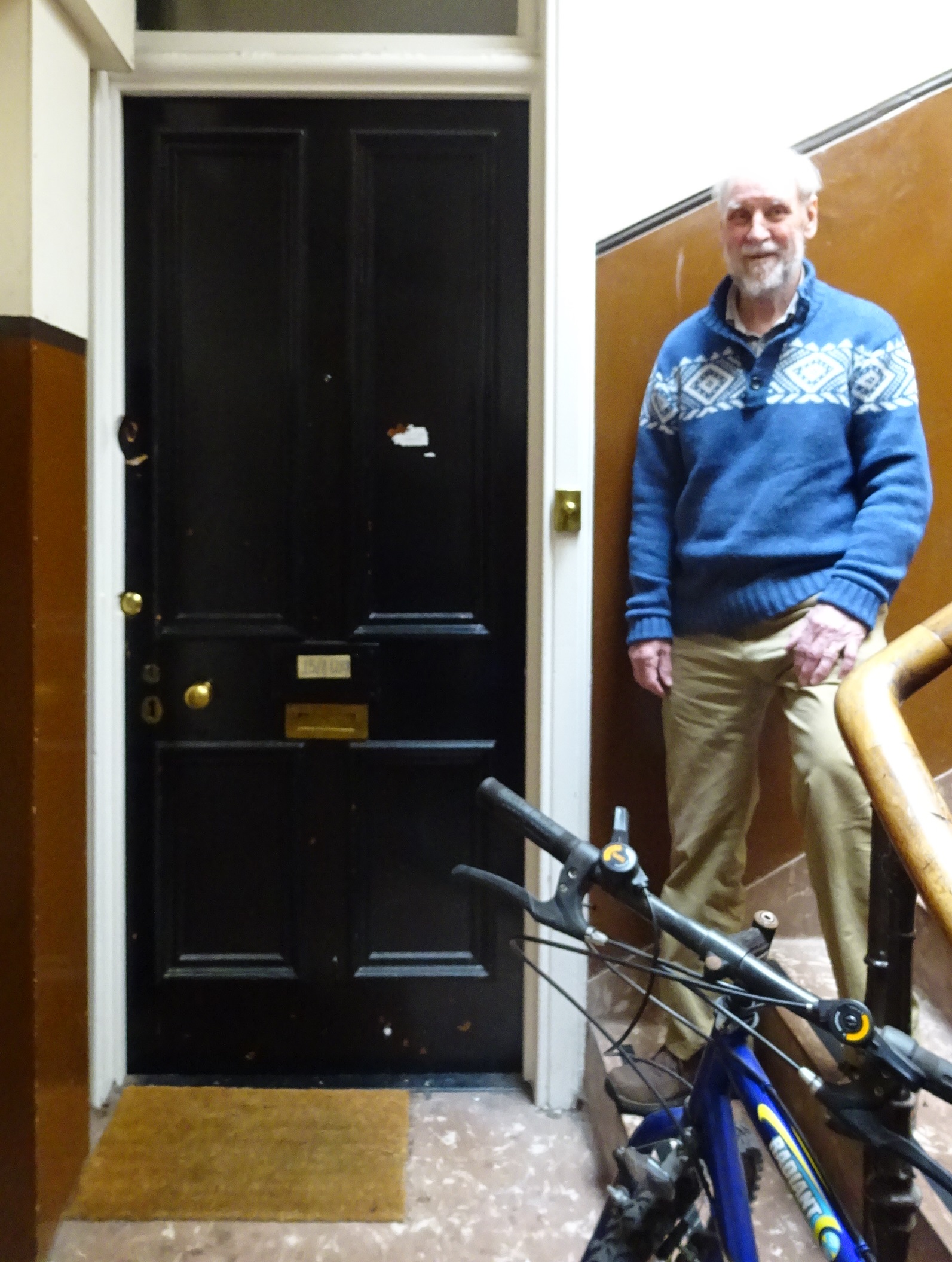
The next photograph shows the internal stair.  The property now has mains electricity but when I lived in it there was none.  At night, especially in winter, the stair was dark and a battery-operated torch was often in use.  A grassy communal area at the back of the building was formerly used for hanging out the washing but there was none there when I visited.
DSC02150

There are twenty or more steps between floors.  The next photograph shows me two flights up, outside the door of flat 8.

JBM outside front door

The busiest room in the house was the kitchen.  It has a wide window that faces northeast, looking out over the city of Edinburgh towards the Firth of Forth.  When I lived in this flat the kitchen had a cast iron range with at least one built-in oven heated by a central coal fire.  An iron kettle could be hung over the fire to boil water.  Heavy iron pans could be balanced above the fire.
The kitchen had a large central table where meals were prepared and eaten.  In the window recess there was a large kitchen sink with one cold water tap.  When hot water was needed it was transferred in a kettle from the range.  In a corner of the room away from the window there was a bed recess, an area large enough to take a double bed, and it may have had a curtain that could be drawn across to make the area into a little bedroom.  That was where my parents slept.

Coal fires were the only form of heating in the house when I lived there.  The fire in the range was kept burning most of the time, and there were fireplaces in Granny’s bedroom and in the parlour.  The house had no mains electricity.  It did have mains gas but that was used only for gas lamps, suspended from the ceiling in each of the three main rooms.  A fanlight over the flat door did allow some daylight into the hall.

There was no bathroom in the flat – only a small toilet opening off the hall.  This small room had no window, but it did have an electric battery torch fixed to the wall.  When I was small I was probably bathed in the kitchen sink or in a large zinc tub placed near the range in the kitchen.  When I was older I remember my father taking me on a short walk to the nearby public baths where he paid for a bathroom that had a very large bath with lots of hot water available.  I think we had the choice of taking our own towels or of hiring towels there.

JBM standing in doorway

I left 15 Cathcart Place after this brief visit to my childhood home still struggling to remember how life had been for me all those years ago.

After the war

In the previous post I quoted from an account given by my father, Robert McInnes, of his departure from civilian life in Edinburgh in 1914 when he was called up for military service in France.  In 1918 (or it may have been in 1919) he returned to Edinburgh to live with his parents and to resume his work in the wholesale fruit and vegetable market.

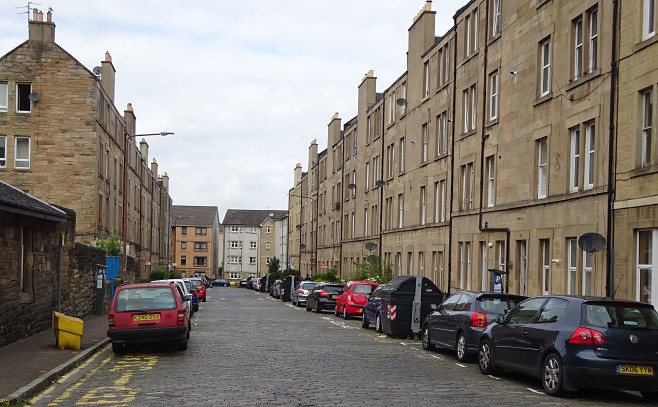
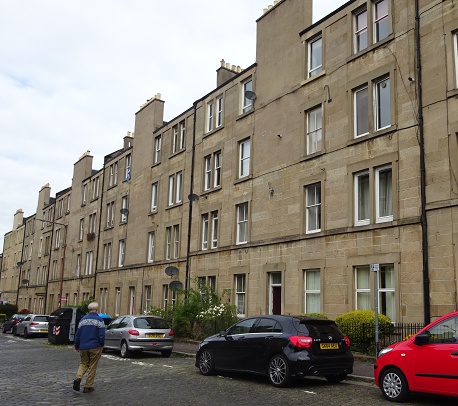
On a recent visit to Edinburgh I was able to go to Cathcart Place, the street where both my father and I were born (in different houses).  The road is paved with ‘causies’ (causeway stones) and it looks much the same as it did when I was a child, except that now there are painted lines – white lines showing where cars may be parked, and yellow ones where parking is forbidden or at least discouraged. There were very few cars in this part of Edinburgh in the 1930s.  I and the other local children were able to play in the street, unaffected by traffic.

150926 cr Cathcart Place

On either side there are ‘tenements’, the local name for apartment blocks.  These ones were built well over a hundred years ago.  About half way down on the left is number 20 and one of the flats in that tenement is where my father lived with his parents and his three siblings till after the war had ended.

My father’s workplace in Market Street was about a mile and a half from his home and he made that journey routinely four times a day.  There was a frequent tram service down Dalry Road to Haymarket and then along Princes Street past Edinburgh Castle to Waverley Station, where the Fruit Market was, but he usually made the journey on foot, often walking through Princes Street Gardens rather than along the street itself.

Deliveries of fruit and vegetables arrived overnight in closed wagons at a railway siding that ran along Market Street below street level.  The wholesale fruit and vegetable companies owned properties that lined that siding and their staff arrived early in the morning, before 07:00, I think, to unload the wagons into the warehouses.  Retailers came during the day to purchase what they needed for their shops in the city and in neighbouring towns and villages.

Wood Ormerod, the company for which my father worked, supplied a cooked breakfast for their staff at around 09:00 and then allowed them a long meal break in the middle of the day.  My father used to walk home for that meal (called dinner rather than lunch) and then back to work again for three or more hours before returning home for the evening meal (called tea, although it usually included a substantial cooked dish).  I realize that he led a disciplined life, with good meals and healthy exercise, often walking around six miles a day.

His mother died in 1924, aged 66, and at about that time the family moved from their flat in Cathcart Place to a top floor flat at 52 Dalry Road, a short walk away.

DSC02140

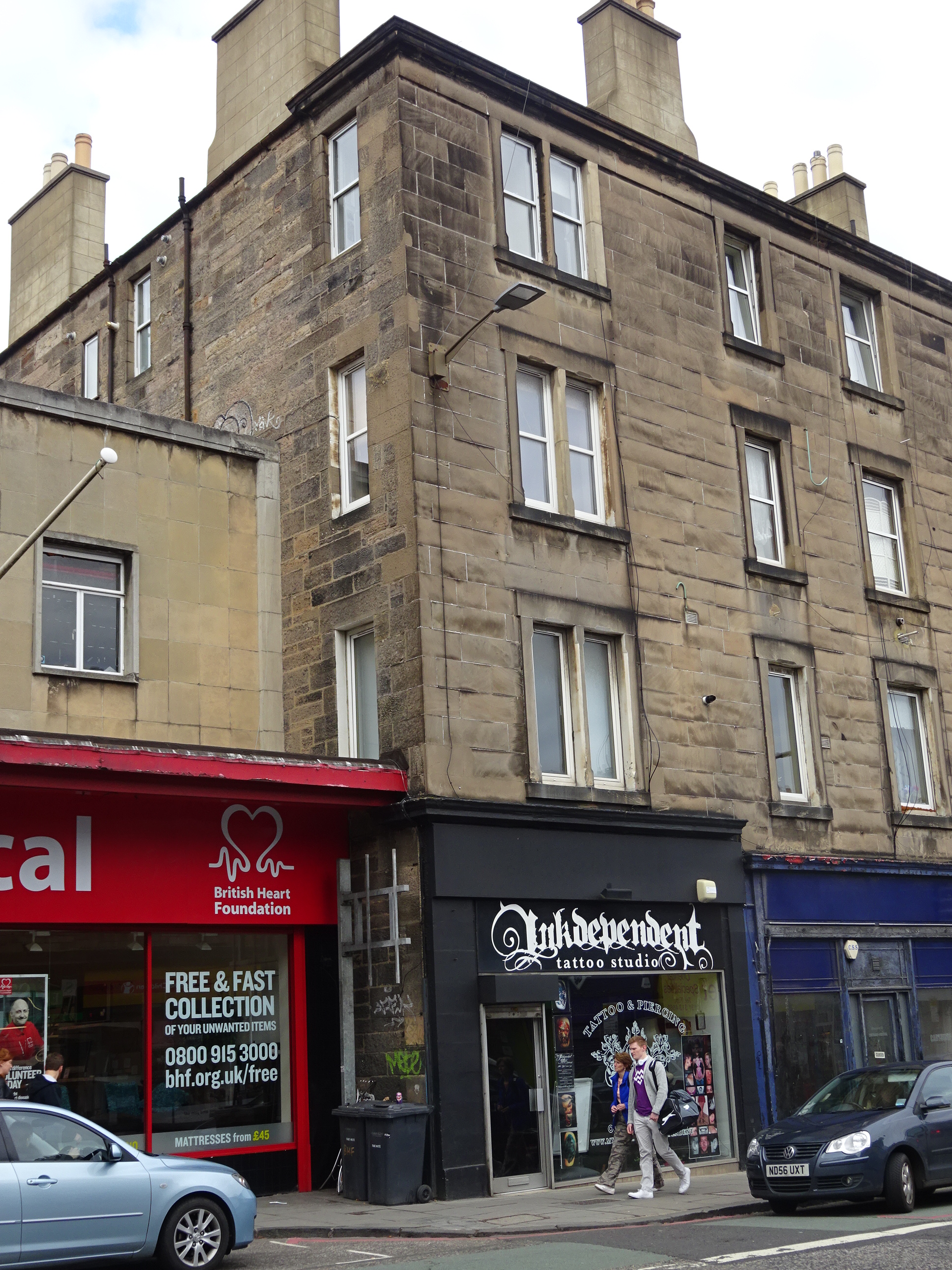
Here is a photograph of that flat.  It has two windows looking out to Dalry Road below, three windows looking west, and another four windows (not visible in this shot) looking north.

Also in Dalry Road, not far from number 52, there was a shop that sold umbrellas, leather handbags, and a variety of items that were described as fancy goods, which is where my mother comes into the story.

Marjory Duff Watt was the youngest of the four children of Andrew Watt and Anne Morrison.  She was born on 14 February 1896 and lived at 2 St David’s Terrace, near Morrison Street in Edinburgh.  Madge (as she was usually called) went to Torphichen Street School and left in 1910 when she reached the age of 14.  Her mother had been looking out for a career opportunity for her, although that sounds rather too grand: basically she wanted to help her to earn a living.  One day in 1910 my grandmother walked down Morrison Street to Haymarket and then up Dalry Road.  There she noticed an advertisement in the umbrella shop window inviting job applications for work as a sales assistant.  I don’t know if Madge had expressed any interest in such work but her mother took her to the shop and she got the job, which she continued to do for the next sixteen years.  The shop was about half a mile from her home.

The owner of the shop, Tom Chambers, happened to be a member of the Glanton Brethren Assembly in George Street which was attended by the McInnes family.  Young Madge was invited to join a Bible Class that was led by a member of the Chambers family.  She did so and eventually decided to leave the Church of Scotland to which her family belonged and join the Brethren.  The Church of Scotland minister tried to persuade her that she was just the type of sincere Christian that he needed in his congregation but she remained convinced that she ought to leave.  She remained a member of the Glanton Brethren for the rest of her life.

Madge’s father died in 1919 and when her three older siblings married and left home she became her mother’s main support and I expect that eventually her earnings provided most of the family income.  My grandmother may well have wondered what would happen to her if her daughter got married.

I do not know when Madge Watt became friendly with Robert McInnes but I do know that they would often meet each other at the Sunday services and other meetings of the Brethren.  He would sometimes go into the umbrella shop as he passed by on his way to or from his dinner.  When I was a child my mother told me that on one occasion he demonstrated the filling effect of his meal.  Like most men at that time he wore a three piece suit.  The sleeveless waistcoat had a small belt at the back which could be adjusted.  One day Robert loosened his waistcoat when he left work for the dinner break and called in at the umbrella shop to say hello.  He pointed out that his waistcoat was very loose and remarked that he was feeling hun gry. After dinner he called in again and demonstrated that his dinner had made a noticeable difference:  the waistcoat was now very tight!  I wasn’t sure that I believed my mother when she said that she was fooled by this demonstration.

The friendship flourished and on 2 June 1926, when he was 33, Robert McInnes married Madge Watt.  I think that his parents’ flats in Cathcart Place and Dalry Road had been rented properties.  Robert was not highly paid, but he had been saving up to buy a home for himself, and before the wedding he had bought a flat in 15 Cathcart Place, across the street from his boyhood home.  That tenement is on the right of the Cathcart Place photograph above (beyond the red car) and the photograph below shows me walking towards the street level entrance door.

150925 cr BM going to 15 CP

In the next post I hope to write more about the house where I was born.