North Queensferry

It was a gloriously sunny day in Perthshire yesterday, and we fancied a trip out somewhere. We settled on the coastal village of North Queensferry, about an hour’s drive south.

The sky was an almost cloudless blue all the way down to about Inverkeithing, but as we neared the Firth of Forth the cloud became much thicker. When we climbed out of the car, a cold wind blasted us with surprising force, and we hurried indoors as quickly as we could.

We’d decided to have lunch at The Shore restaurant, within the Double Tree Hotel, in North Queensferry. We’d been there once before, many years ago, and remembered that it had a good view of two of the Forth Bridges.

The sun was shining through the large windows of the restaurant, and the cold wind was soon forgotten.

The Shore restaurant in the Double Tree Hotel, North Queensferry.

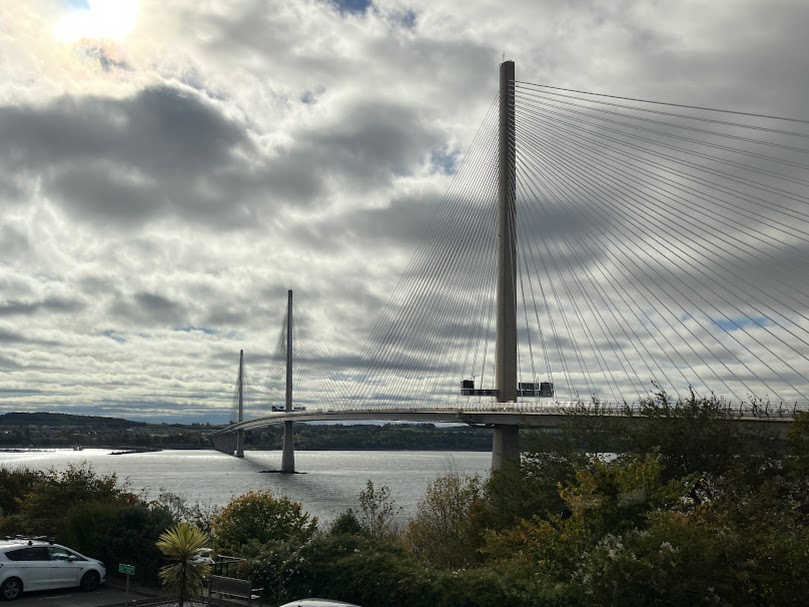
We were seated by a window, with a fine view of the newest of the three bridges that span the Firth of Forth at this point. As we sat looking out at the Queensferry Crossing, we remembered the occasion, in 2017, when we walked across this bridge after it had just been opened. It was designed exclusively for vehicles, and pedestrians are not normally permitted to cross it. However, an opportunity was granted, through a public ballot, to celebrate the opening. The fortunate 50,000 of us who obtained tickets traipsed across it over a weekend in September. The walk was 1.7 miles (2.7km) long.

The Queensferry Crossing.

After perusing the menu, Lorna and I both opted for the Tuscan vegetable soup, which was served with sourdough toast.

Tuscan vegetable soup with sourdough toast.

The soup was packed with vegetables, including a lot of peas and different types of bean. We both enjoyed it, and found it hearty and filling.

Hearty Tuscan vegetable soup at The Shore, Double Tree Hotel, North Queensferry.

It was a very slow meal, and before we ordered pudding I needed to visit the facilities. I don’t think I’ve ever seen a sign with this wording on an accessible toilet.

Accessible toilet at the Double Tree Hotel, North Queensferry.

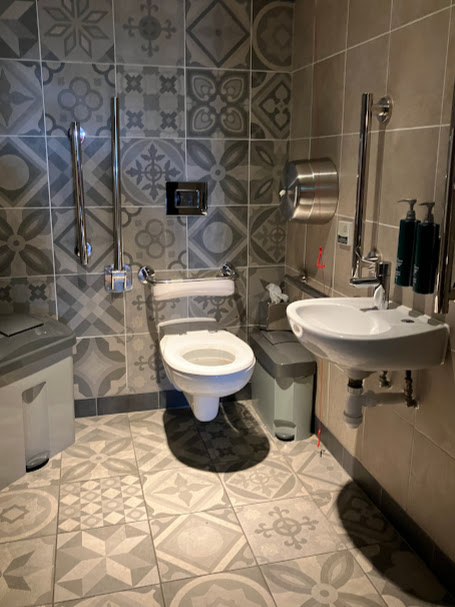
Inside, it was roomy, and very well equipped with grabrails.

Inside the accessible toilet at the Double Tree Hotel, North Queensferry.

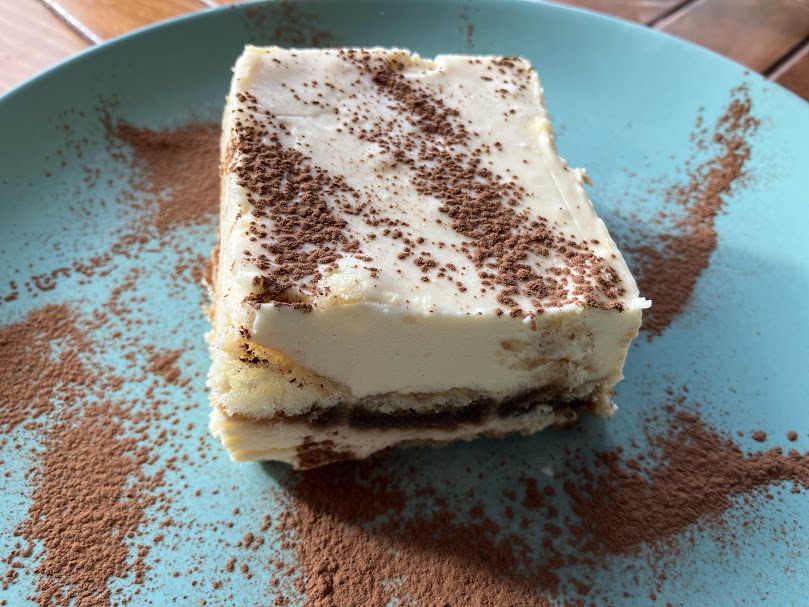
Back at the table, we both chose the same pudding: tiramisu. It looked unlike any tiramisu I’ve had before, and wasn’t particularly appealing on first inspection, but in fact the taste far exceeded our expectations. It was light, creamy, and quite delicious.

Surprisingly tasty tiramisu at The Shore restaurant.

Although we didn’t have a view of the old Forth Road Bridge from our dining table, it was clearly visible from outside the building.

Forth Road Bridge.

This was the bridge that carried all traffic across the Firth of Forth here, prior to the construction of the Queensferry Crossing. It’s still operational, but open only to buses, taxis, cyclists and pedestrians.

Before leaving this neck of the woods, we felt it only right to admire the third and oldest bridge in this area, the Forth Rail Bridge. It took 8 years to build, and was opened in 1890. It’s a majestic structure, and one of the country’s great landmarks.

The Forth Rail Bridge, seen from North Queensferry.

The big picture

From 1996 to 2004 my home was in Pitlochry, a small town in the centre of Scotland. It had a local branch of a club for professionals called Probus and although I wasn’t a member I did give occasional talks. Some notes that I made for a talk on 5 August 2004 have recently emerged from my archives (also known as ‘the piles of papers’) and my daughter Lorna has suggested that I should turn these notes into a short series of blog posts. So here goes.

The club secretary asked for an indication of the subject matter of the talk and I suggested that I might offer an answer to a simple question: ‘Is there any life in the universe apart from the life on Earth that we know about already?’

ROE

Because I spent most of my working life (1960 to 1989) as an astronomer, mostly based at the Royal Observatory, Edinburgh (shown above as it was when I worked there), I’ve had to think about that question more than most people, but I don’t regard myself as an expert and warn any reader that what I say on the subject should be treated with caution. My scientific training means that I try to work from evidence wherever possible, but some of what I regard as evidence might well seem to you to be wild speculation or wishful thinking.

The talk was in two parts. The first dealt with the universe – how old it is and how large it is. The second part dealt with life, actual and possible – on the Earth, on the Moon, on Mars, on other bodies in the solar system, and in places so far away that direct exploration is apparently impossible.

An old universe

Views on the history of the universe range very widely. At one extreme there are people who believe that it’s very young: that it was created only about six thousand years ago. At the other extreme there are people who believe that it’s infinitely old: that it did not have a beginning at all. I think that most educated people in the western world reject both of these extreme views and accept that the universe is very old and that space and time came into being, together, about 15 thousand million years ago with a unique event known as the big bang. (I could have written 15 billion years, but when I was at school a billion meant a million millions, and to avoid confusing myself I usually avoid using the word billion.)

This belief about the age of the universe is based on the findings of the last few centuries of scientific investigation, and there is a well-established branch of science, called cosmology, which deals with the origin of the universe, its development over an unimaginably long time, and its probable end in the very distant future.
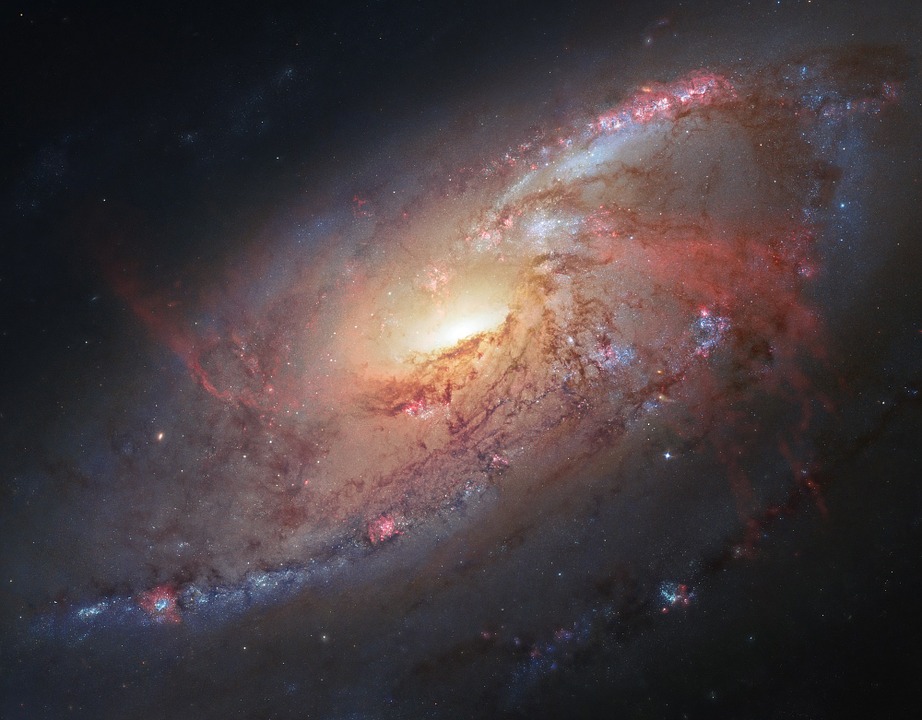
spiral-galaxy-1060381_960_720

A spiral galaxy

The evidence suggests that the great star systems called galaxies (like the one shown above) began to form out of the basic material of the universe more than 10 thousand million years ago. Our solar system (the Sun and its family of planets, including the Earth) condensed out of the gas and dust in this part of the universe, the Milky Way Galaxy, only about 5 thousand million years ago.

 Our solar system

Our Earth is a massive spherical ball of rock, the central parts very hot and fluid and the outer crust cool and solid but with much of the surface covered by water. Because we’re on it – and pretty well confined to it – the Earth is the centre of our universe. We’re ‘here’, and everything else is ‘out there’. To us the Earth feels completely steady, immovably fixed at the centre of the universe. That’s the common sense view of things, but in order to understand such basic parts of our experience as day and night, summer and winter, the movements in the sky of stars, planets, comets, and so on, we human beings have had to modify that view, and to think of our planetary home as moving round the very much larger Sun.

Although we can’t feel the Earth moving, we now know it’s a sphere with a diameter of 13 thousand kilometres, that it spins on its axis once a day, and that it moves, in a roughly circular orbit once a year, round the Sun at a distance of around 150 million kilometres. The Sun is also a sphere. But it’s very much larger than the Earth: it has a diameter of 1.4 million kilometres, more than a hundred times that of the Earth. It’s the dominant source of light in this part of the universe. The next brightest light in the sky is the Moon. It’s also spherical, but because of the way that we see it, by reflected sunlight, it appears to change shape from a very thin crescent at New Moon to a circular disk at Full Moon, and then shrinks again to a thin crescent (facing the other way) before going through the same cycle over the next 30 or so days: the Moon has a diameter of 3.5 thousand kilometres, only about a quarter of the Earth’s diameter, and it orbits, once a month, round the Earth at a distance of 380 thousand kilometres.

During the night hours, when the Sun is below the horizon, the sky is peppered with bright spots of light (unless of course there are clouds spoiling the view). The vast majority of these lights are stars, bodies like the Sun, shining because they’re burning up the material that composes them. A small number of them, however, are very much closer to us. Unlike the stars, which remain in a fixed pattern in the night sky, these spots of light move about against the star background, behaviour that earned them the title of wandering stars. They are the planets, orbiting the Sun in the same way as the Earth does: Mercury, Venus, Mars, Jupiter, and Saturn. (There are other planets, visible only with optical aid.) The planets do not twinkle as much as the stars because they are so much nearer to us than the stars: even if we cannot see the disks of the planets the beams of light that come from them to the irises of our eyes have greater width as they pass through the shimmering atmosphere than the extremely slender beams that come from the stars.

Mercury and Venus are closer to the Sun than we are. In the night sky Mercury is always so near to the Sun that it’s visible only soon after sunset and soon before sunrise. It’s quite faint and not very easy to identify. I’ve identified it only a few times, when I knew precisely where to look.

Venus is very much brighter, so much so that it’s sometimes visible in the day sky before the Sun has gone down or after it has risen. That is why it’s sometimes called the Evening Star or the Morning Star. With optical aid Venus can be seen to have a crescent shape, like the Moon. Venus is slightly smaller than the Earth but its atmosphere would be toxic to humans and it does not offer a home for life as we know it.

Mars, Jupiter and Saturn orbit the Sun farther out than the Earth. Mars has a diameter of 6.8 thousand kilometres, considerably smaller than the Earth, but larger than the Moon. It has a reddish colour, which helps to identify it.

Jupiter, with a diameter of more than 140 thousand kilometres, is the largest of the planets. It shines brightly, but because of its greater distance from the Sun it is not usually as bright as Venus is.

Saturn, around 120 thousand kilometres in diameter, is somewhat smaller than Jupiter. It is surrounded by rings of small rocky satellites, visible only with optical aid.

Large numbers

Making sense of large numbers like a thousand million is not easy and so the next instalment of this blog will offer some help by describing simple models of the solar system.

Earlier posts in this blog did not offer the invitation to make comments but I’ve changed that for this post.
My first five years

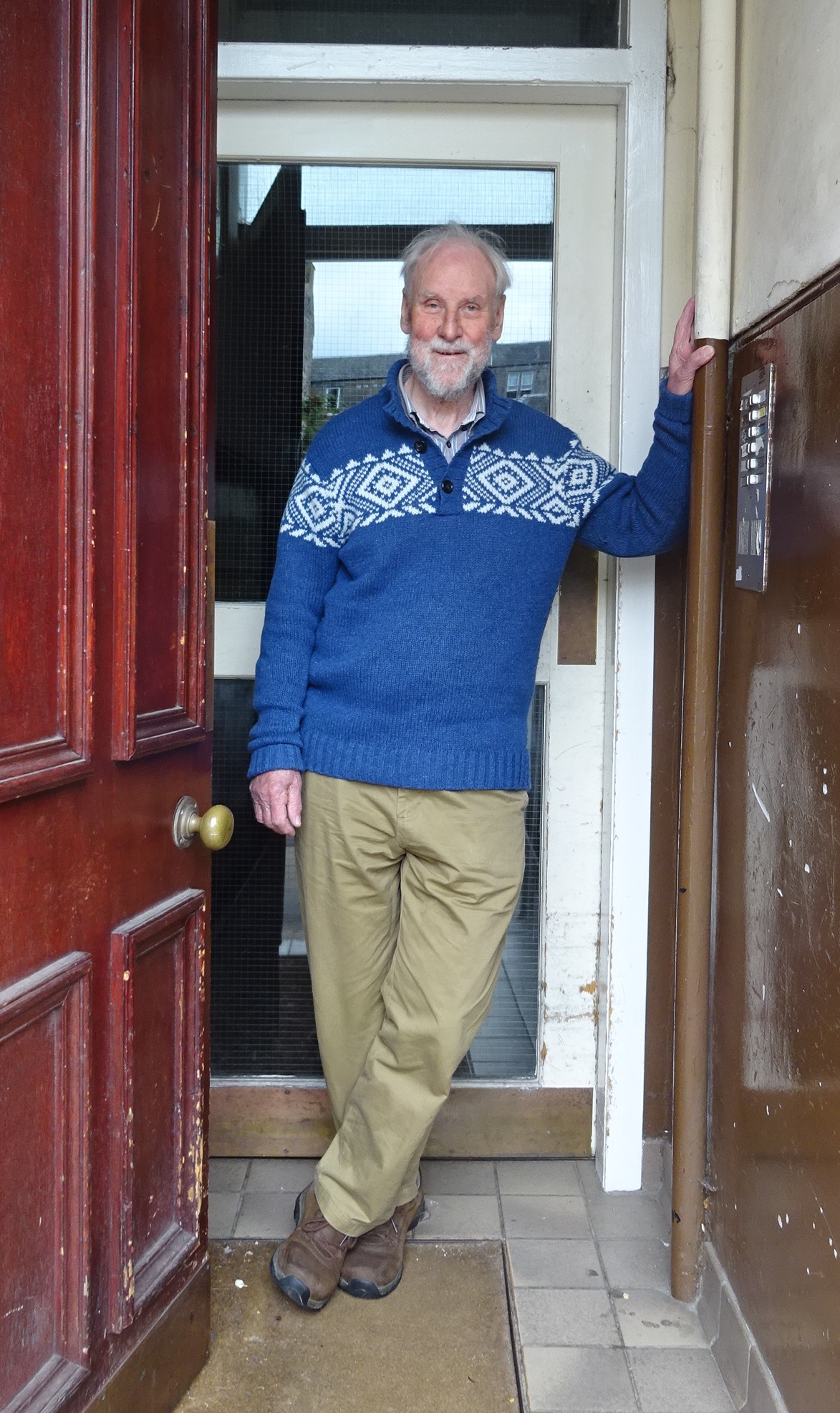
The following photograph, taken in September 2015, shows 15 Cathcart Place, a residential tenement in Edinburgh.  It has eleven small flats (apartments) and I was born in flat 8 (on the floor below the top floor).  That was my home from 1929 to 1934.  The three windows on the left side of this shot belong to flat 8, including the one with a white blind.  (I’m standing in the street level entrance door that leads to the internal stair.)

Outside Dalry Road with JBM in doorway

The flat has two rooms looking out over the street.  The two narrow windows on the left of the photograph are in what we called the parlour, a room used mainly when we had visitors.  The wider window with a white blind is in what was Granny’s bedroom.  The other windows of the flat are on the far side of the building.

The next photograph shows the internal stair.  The property now has mains electricity but when I lived in it there was none.  At night, especially in winter, the stair was dark and a battery-operated torch was often in use.  A grassy communal area at the back of the building was formerly used for hanging out the washing but there was none there when I visited.

DSC02150

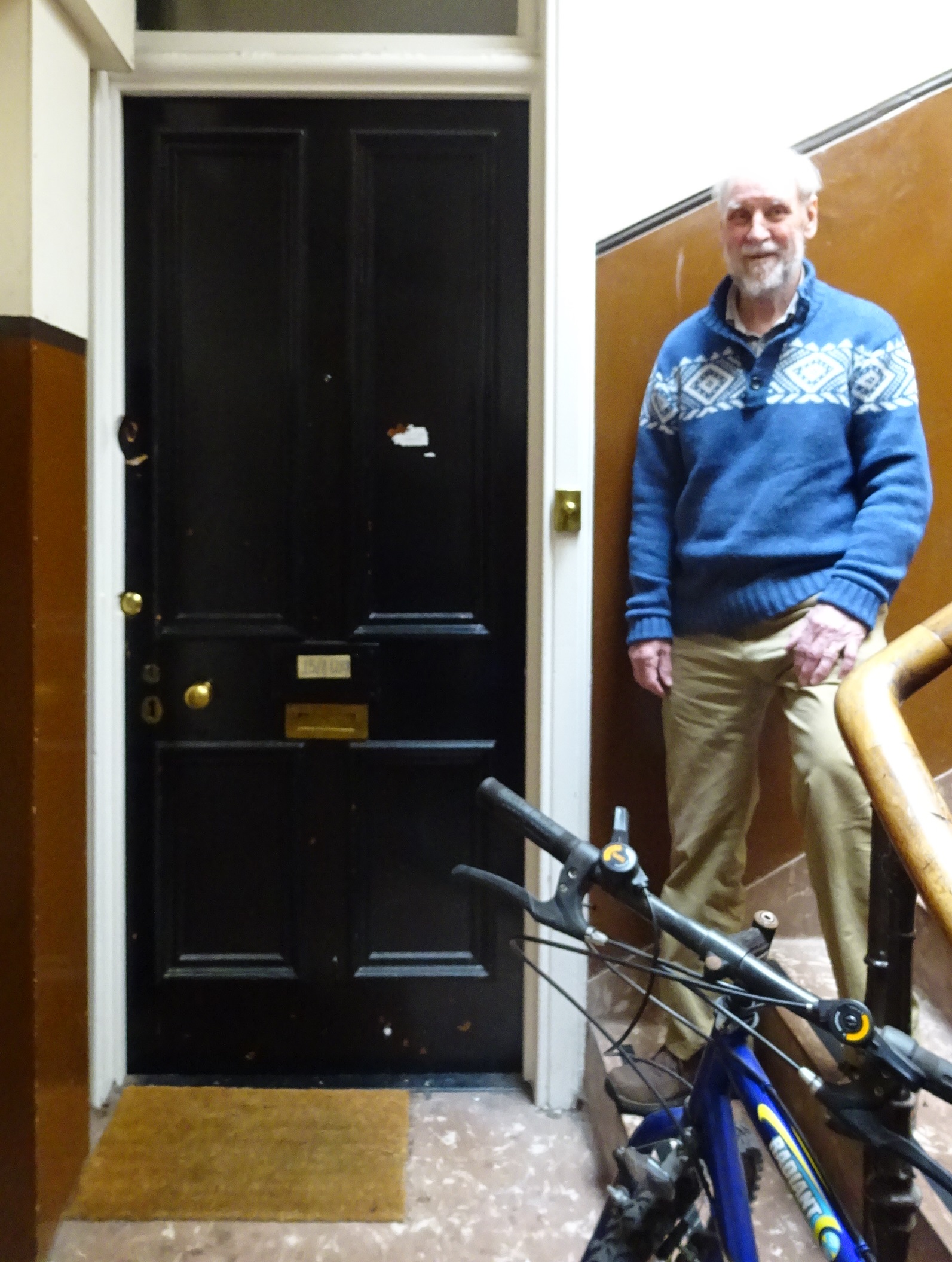
There are twenty or more steps between floors.  The next photograph shows me two flights up, outside the door of flat 8.

JBM outside front door

The busiest room in the house was the kitchen.  It has a wide window that faces northeast, looking out over the city of Edinburgh towards the Firth of Forth.  When I lived in this flat the kitchen had a cast iron range with at least one built-in oven heated by a central coal fire.  An iron kettle could be hung over the fire to boil water.  Heavy iron pans could be balanced above the fire.

The kitchen had a large central table where meals were prepared and eaten.  In the window recess there was a large kitchen sink with one cold water tap.  When hot water was needed it was transferred in a kettle from the range.  In a corner of the room away from the window there was a bed recess, an area large enough to take a double bed, and it may have had a curtain that could be drawn across to make the area into a little bedroom.  That was where my parents slept.

Coal fires were the only form of heating in the house when I lived there.  The fire in the range was kept burning most of the time, and there were fireplaces in Granny’s bedroom and in the parlour.  The house had no mains electricity.  It did have mains gas but that was used only for gas lamps, suspended from the ceiling in each of the three main rooms.  A fanlight over the flat door did allow some daylight into the hall.

There was no bathroom in the flat – only a small toilet opening off the hall.  This small room had no window, but it did have an electric battery torch fixed to the wall.  When I was small I was probably bathed in the kitchen sink or in a large zinc tub placed near the range in the kitchen.  When I was older I remember my father taking me on a short walk to the nearby public baths where he paid for a bathroom that had a very large bath with lots of hot water available.  I think we had the choice of taking our own towels or of hiring towels there.

JBM standing in doorway

I left 15 Cathcart Place after this brief visit to my childhood home still struggling to remember how life had been for me all those years ago.

After the war

In the previous post I quoted from an account given by my father, Robert McInnes, of his departure from civilian life in Edinburgh in 1914 when he was called up for military service in France.  In 1918 (or it may have been in 1919) he returned to Edinburgh to live with his parents and to resume his work in the wholesale fruit and vegetable market.

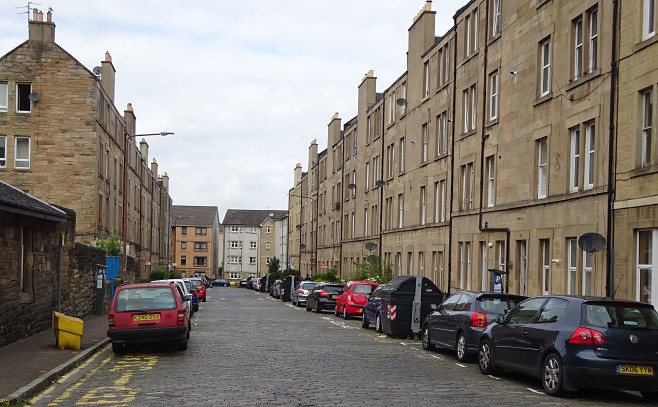
On a recent visit to Edinburgh I was able to go to Cathcart Place, the street where both my father and I were born (in different houses).  The road is paved with ‘causies’ (causeway stones) and it looks much the same as it did when I was a child, except that now there are painted lines – white lines showing where cars may be parked, and yellow ones where parking is forbidden or at least discouraged. There were very few cars in this part of Edinburgh in the 1930s.  I and the other local children were able to play in the street, unaffected by traffic.

150926 cr Cathcart Place

On either side there are ‘tenements’, the local name for apartment blocks.  These ones were built well over a hundred years ago.  About half way down on the left is number 20 and one of the flats in that tenement is where my father lived with his parents and his three siblings till after the war had ended.

My father’s workplace in Market Street was about a mile and a half from his home and he made that journey routinely four times a day.  There was a frequent tram service down Dalry Road to Haymarket and then along Princes Street past Edinburgh Castle to Waverley Station, where the Fruit Market was, but he usually made the journey on foot, often walking through Princes Street Gardens rather than along the street itself.

Deliveries of fruit and vegetables arrived overnight in closed wagons at a railway siding that ran along Market Street below street level.  The wholesale fruit and vegetable companies owned properties that lined that siding and their staff arrived early in the morning, before 07:00, I think, to unload the wagons into the warehouses.  Retailers came during the day to purchase what they needed for their shops in the city and in neighbouring towns and villages.

Wood Ormerod, the company for which my father worked, supplied a cooked breakfast for their staff at around 09:00 and then allowed them a long meal break in the middle of the day.  My father used to walk home for that meal (called dinner rather than lunch) and then back to work again for three or more hours before returning home for the evening meal (called tea, although it usually included a substantial cooked dish).  I realize that he led a disciplined life, with good meals and healthy exercise, often walking around six miles a day.

His mother died in 1924, aged 66, and at about that time the family moved from their flat in Cathcart Place to a top floor flat at 52 Dalry Road, a short walk away.

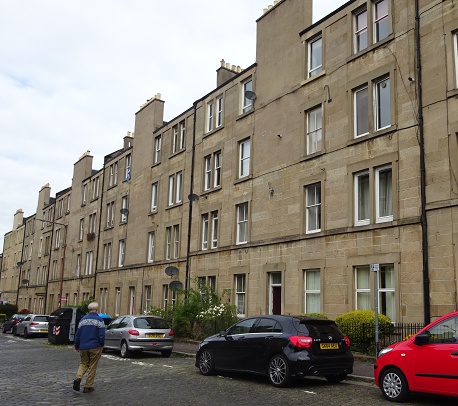
DSC02140

Here is a photograph of that flat.  It has two windows looking out to Dalry Road below, three windows looking west, and another four windows (not visible in this shot) looking north.

Also in Dalry Road, not far from number 52, there was a shop that sold umbrellas, leather handbags, and a variety of items that were described as fancy goods, which is where my mother comes into the story.

Marjory Duff Watt was the youngest of the four children of Andrew Watt and Anne Morrison.  She was born on 14 February 1896 and lived at 2 St David’s Terrace, near Morrison Street in Edinburgh.  Madge (as she was usually called) went to Torphichen Street School and left in 1910 when she reached the age of 14.  Her mother had been looking out for a career opportunity for her, although that sounds rather too grand: basically she wanted to help her to earn a living.  One day in 1910 my grandmother walked down Morrison Street to Haymarket and then up Dalry Road.  There she noticed an advertisement in the umbrella shop window inviting job applications for work as a sales assistant.  I don’t know if Madge had expressed any interest in such work but her mother took her to the shop and she got the job, which she continued to do for the next sixteen years.  The shop was about half a mile from her home.

The owner of the shop, Tom Chambers, happened to be a member of the Glanton Brethren Assembly in George Street which was attended by the McInnes family.  Young Madge was invited to join a Bible Class that was led by a member of the Chambers family.  She did so and eventually decided to leave the Church of Scotland to which her family belonged and join the Brethren.  The Church of Scotland minister tried to persuade her that she was just the type of sincere Christian that he needed in his congregation but she remained convinced that she ought to leave.  She remained a member of the Glanton Brethren for the rest of her life.

Madge’s father died in 1919 and when her three older siblings married and left home she became her mother’s main support and I expect that eventually her earnings provided most of the family income.  My grandmother may well have wondered what would happen to her if her daughter got married.

I do not know when Madge Watt became friendly with Robert McInnes but I do know that they would often meet each other at the Sunday services and other meetings of the Brethren.  He would sometimes go into the umbrella shop as he passed by on his way to or from his dinner.  When I was a child my mother told me that on one occasion he demonstrated the filling effect of his meal.  Like most men at that time he wore a three piece suit.  The sleeveless waistcoat had a small belt at the back which could be adjusted.  One day Robert loosened his waistcoat when he left work for the dinner break and called in at the umbrella shop to say hello.  He pointed out that his waistcoat was very loose and remarked that he was feeling hun gry. After dinner he called in again and demonstrated that his dinner had made a noticeable difference:  the waistcoat was now very tight!  I wasn’t sure that I believed my mother when she said that she was fooled by this demonstration.

The friendship flourished and on 2 June 1926, when he was 33, Robert McInnes married Madge Watt.  I think that his parents’ flats in Cathcart Place and Dalry Road had been rented properties.  Robert was not highly paid, but he had been saving up to buy a home for himself, and before the wedding he had bought a flat in 15 Cathcart Place, across the street from his boyhood home.  That tenement is on the right of the Cathcart Place photograph above (beyond the red car) and the photograph below shows me walking towards the street level entrance door.

150925 cr BM going to 15 CP

In the next post I hope to write more about the house where I was born.

Thousands of mornings

It was a frosty morning at the end of January 2012.  An old man sat comfortably in his house, with a mug of tea in his hand.  As he looked out over the white roofs of the houses nearby, he thought about how many mornings he had experienced in his life so far.  A rough calculation showed that the number had already passed thirty thousand.  He was relieved that he did not have detailed memories of all these mornings, but he knew that they had all happened, and that the events of the thirty thousand days that followed them had been woven into the tapestry of his life.

What was his earliest memory?  He had seen photographs of himself as a toddler, including one taken in a photographer’s studio where he was standing with his hands on a small stool, possibly because he would have fallen over without its support.  He was warmly dressed in a fluffy woollen coat and hat, corduroy leggings, and thick mitts.  He had no memory of the photograph being taken, but he had no doubt that he had been in that studio and that this picture was evidence of a day in his life that had probably been as frosty as today was.

Bennet McInnes aged 1 in 1930 - cropped

In 1930 I was the toddler in that photograph, wondering what the photographer was doing.  In 2012 I was the old man with the mug of tea, thinking about my past life, more than eighty years long so far.

As I rack my brain to recall early memories I remember something that happened when I was about three years old.  My uncle James, my father’s brother, had been showing me how to produce the domino effect, setting up a row of wooden bricks on their narrow edges so that when the first one was tapped to make it fall over it knocked over the rest of the row.  I have a definite memory of that event, and can almost hear again the clatter of the bricks as they tumbled down in a long line.  But it’s only a partial memory and I cannot visualise the room where it happened.  My uncle died on 9 May 1932, aged 35, ten days after my third birthday.

In writing this blog I want to explore some of the ways in which my life has developed.  In particular, I should like to review those times when I made choices that had significant consequences for me and for other people.  I believe that I’m accountable for my actions, in this life to my family and to society at large, and beyond this life to my creator.

My grandmother, my mother’s mother, lived with my parents from their marriage in 1926 for the remaining seventeen years of her life.  She died in 1943, when I was fourteen.  Among other memories that I have are those of her sitting quietly in her room reading from a large-print Bible.  Was she swotting for her finals?